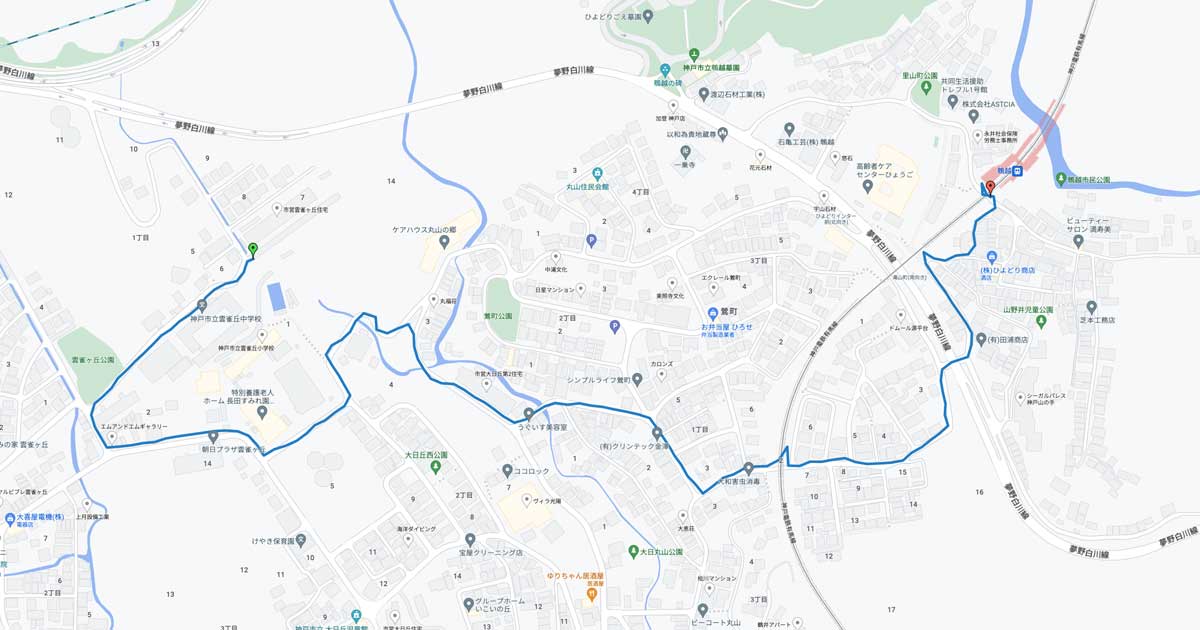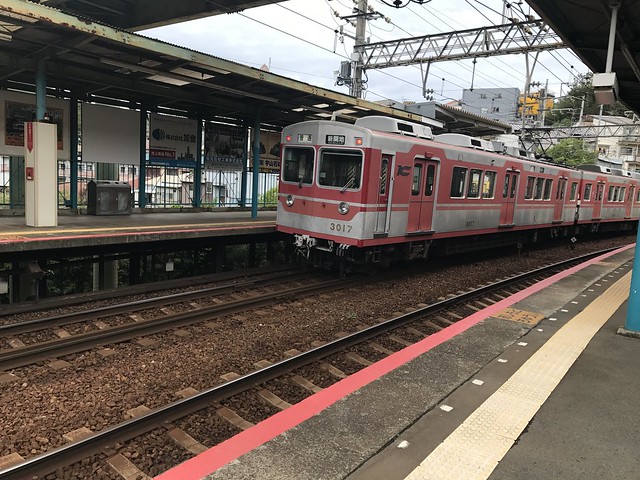
Walking through the city where I was born and raised, Kobe from Maruyama, Nagata Ward to Hiyodorigoeshi (2)
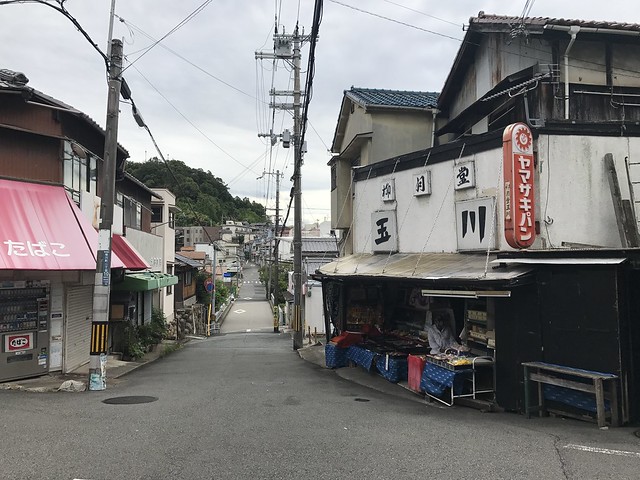
I can't remember what shop it was 40 years ago, but the shop next to this corner shop "Tamagawa" was definitely a candy store. It also had small toys for children, and it was like a gathering place for children in the area. No one knew the shop name, and there was a nickname or name that children passed down. I can't remember it anymore, though.
Reading Wikipedia, Nagata Ward's population was 96,871 as of May 2017.
It's quite low compared to neighboring Suma Ward or Hyogo Ward. Well, I think the population moved to surrounding areas like Nishi Ward, Tarumi Ward, and Kita Ward after the earthquake, so that might be the cause.
And reading Wikipedia, I learned for the first time that Nagata Ward has one of Japan's major Koreatowns, and I never knew that until now.
I realize I lived without being very aware of it, and that you don't really know much about local things. Maybe I was just too innocent.
Also, I lived in a place called Genpei-cho, but when I look it up online again, it says there was a Korean labor camp in the same neighborhood, etc.
Come to think of it, I vaguely remember a place like that, but I think the adults around me at the time avoided going near that area and didn't let it come up in conversation.
Yes, it was like living as if it didn't exist.
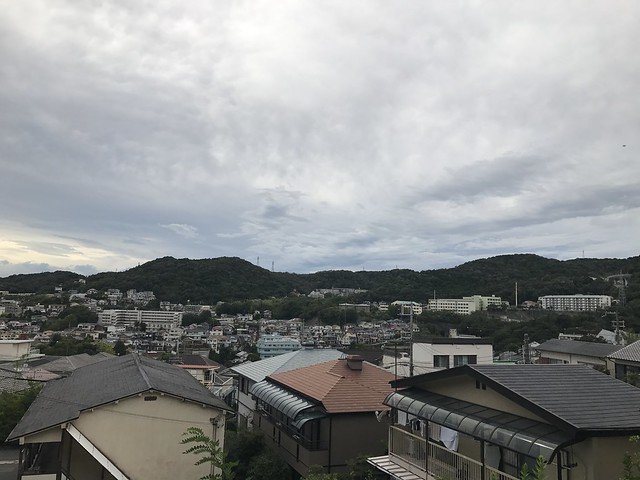
However, walking through this area, I don't meet many people, and not many cars pass through, so I think it's clearly more desolate than 40 years ago.
Many buildings have been renovated and maintained, but those utilizing old buildings stand out. The schools are like that, and the co-op building that felt old even back then is still there almost unchanged.
Thanks to that, there's a sense of reassurance for someone visiting after a long time that things haven't changed, but when I think this scenery might not change until it decays, I get a bit worried.
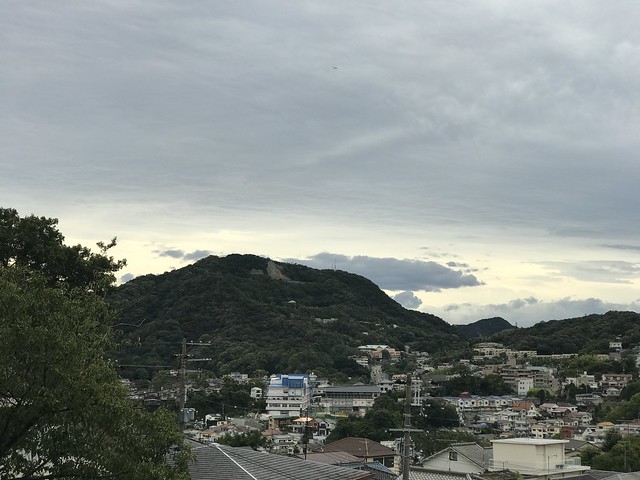
The photo above was taken right behind the house I used to live in, and it's almost unchanged from the scenery I drew for summer vacation homework as a child. I think the only thing that changed is that a nursing care facility building was built. The elementary and junior high schools visible from my house window are also unchanged—the only change is that the exterior walls were repainted. I drew them every year back then, so I remember them surprisingly well, but there are no major changes. When I think that maybe the changes in Japan over these 40 years are only that much, and that Tokyo's city center has changed abnormally, I realize that cities where metabolism no longer occurs can only decline.
There's a photo from my childhood, probably taken by my parents when I was about 5, that reminds me the road in front of my house was dirt. That eventually became asphalt, sewer pipes were laid and manholes appeared on the road, traffic increased so bypasses and toll roads were built, mountains were developed as residential land and houses were built. Also, an apartment building was built on the field where we played baseball. I think everything was busy back then. Also, constant change was natural, but I never imagined it would stop like this. Yes.
To be continued.