Matsusaka Station Night Walk: Tori Yakiniku, a Former Pleasure Quarter & the Ujisato Festival — Mie Prefecture
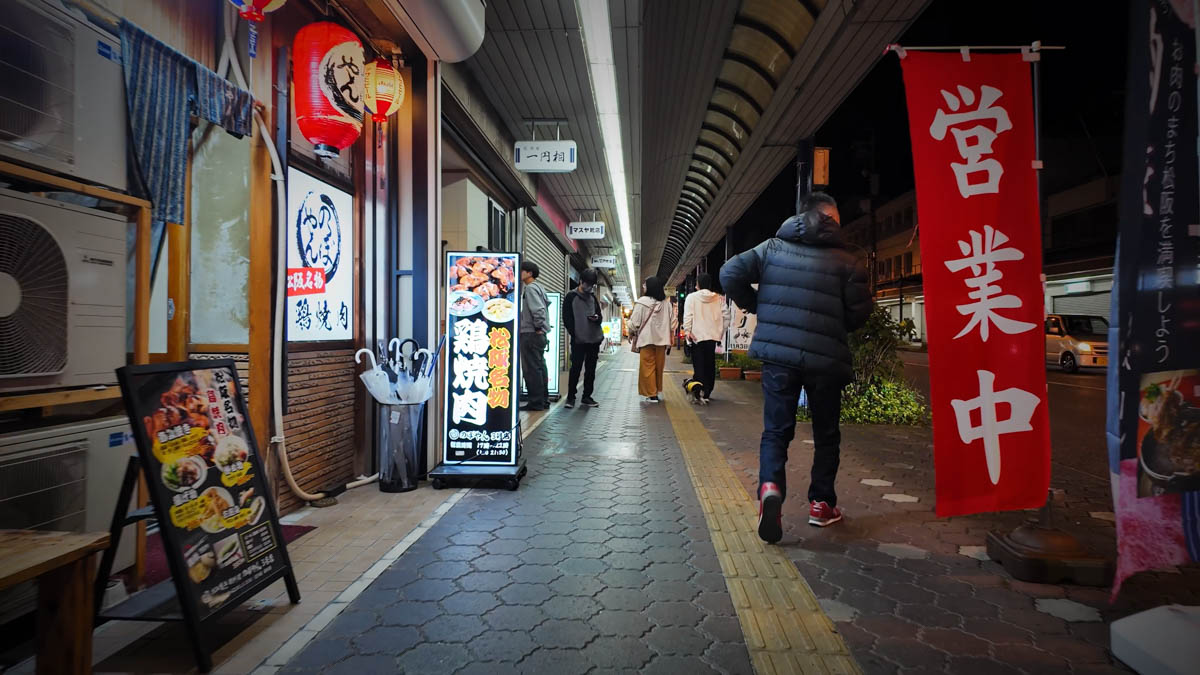
From Wakayama, the route follows the Kinokawa River upstream and then pushes through range after range of mountains before crossing into Mie Prefecture. Mie is dominated by the image of the Ise Grand Shrine, and visitors who venture beyond Ise are relatively few.
Matsusaka City has a population of just over 150,000 — the fourth largest in Mie Prefecture, after Yokkaichi, Tsu, and Suzuka. During the Edo period it prospered as a territory of the Kishu Tokugawa clan, developing in part by capturing demand from the steady flow of pilgrims heading to Ise.
That's the city. I walked around the area near its central station, JR Matsusaka Station. Matsusaka beef is famous nationwide, but locally tori yakiniku (grilled chicken) is just as well loved.
Around the Station
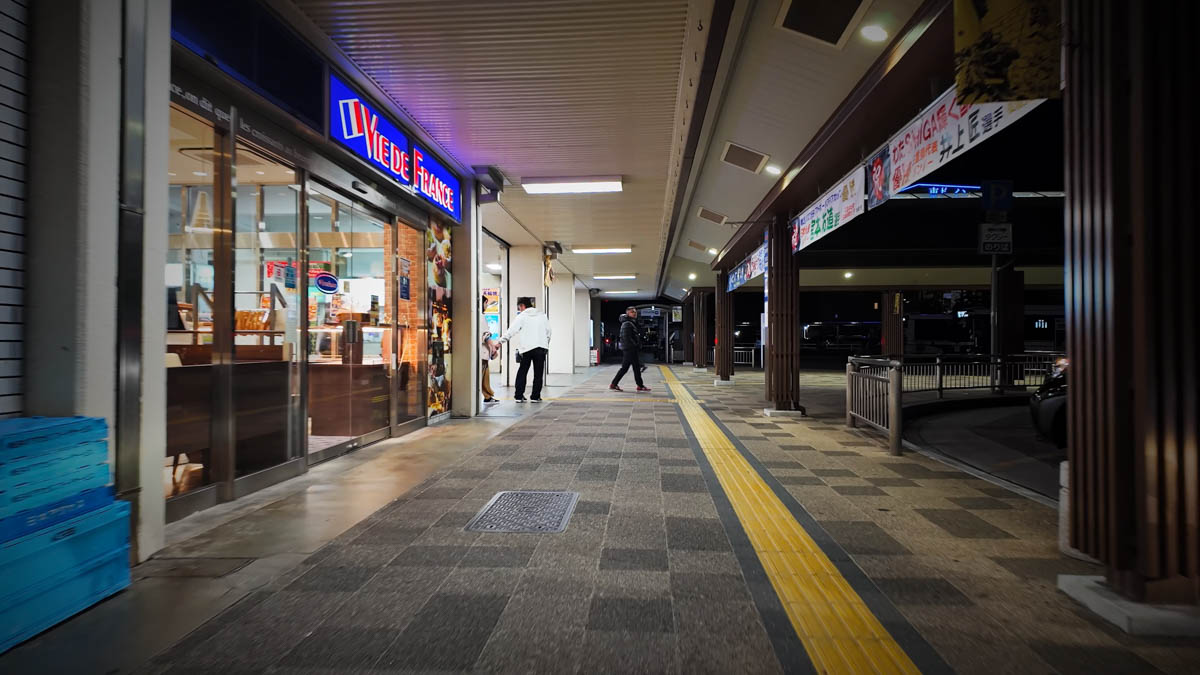
Matsusaka Station. The instinctive reading is "Matsuzaka," but the correct pronunciation is "Matsusaka" — I'd had it wrong until I arrived.
The station forecourt leads into a shopping arcade where the footpath is covered by a canopy. Even at night there was a fair amount of foot traffic heading into town.
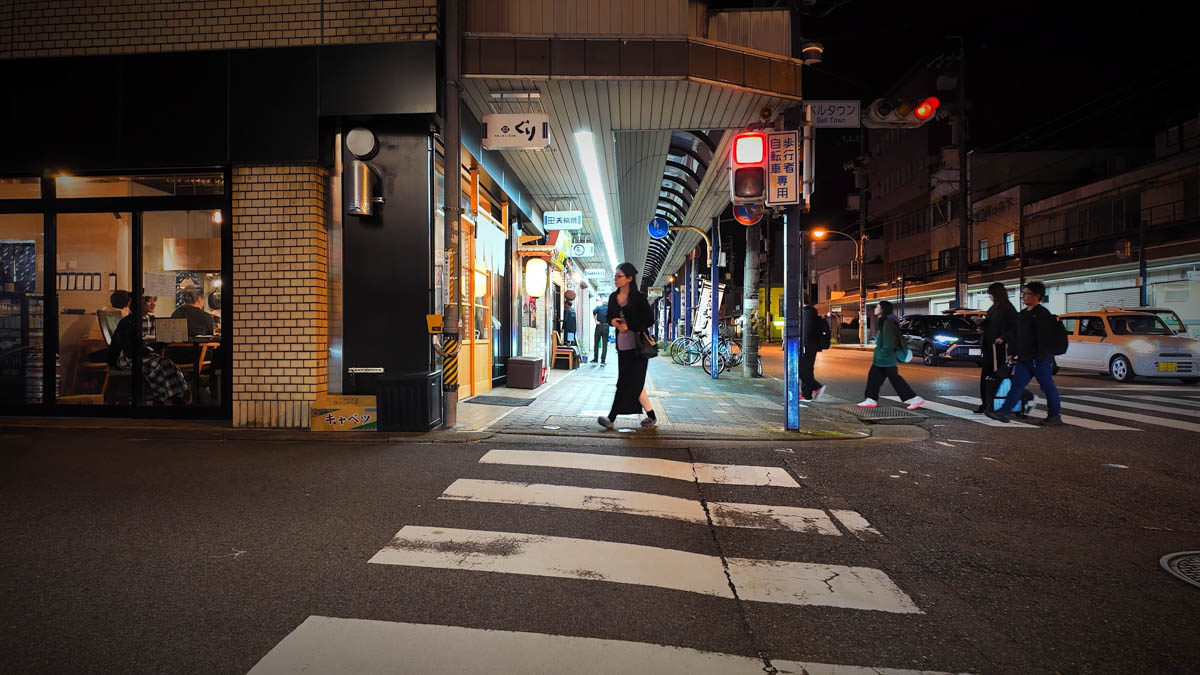
One izakaya was clearly packed — voices carrying through the noren curtain at the entrance. Plenty of places were still open at this hour.
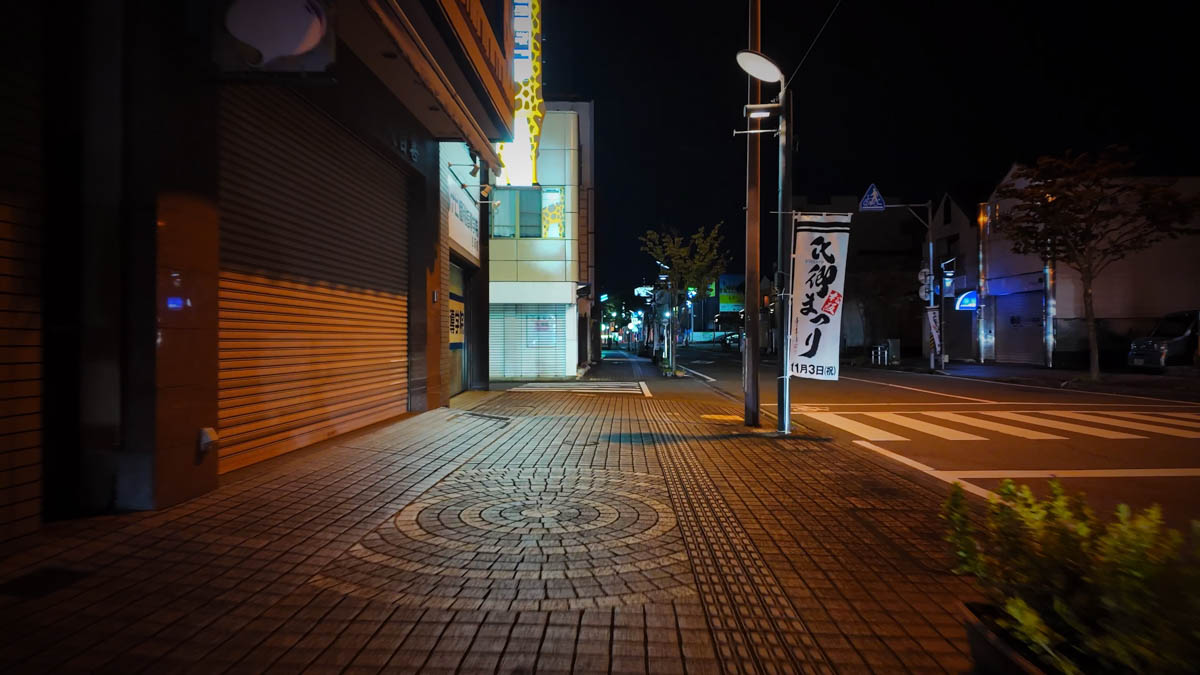
Flags for the "Ujisato Festival" lined the street. It commemorates Gamo Ujisato, the warlord who moved here from Omi Province and laid the foundations of modern Matsusaka.
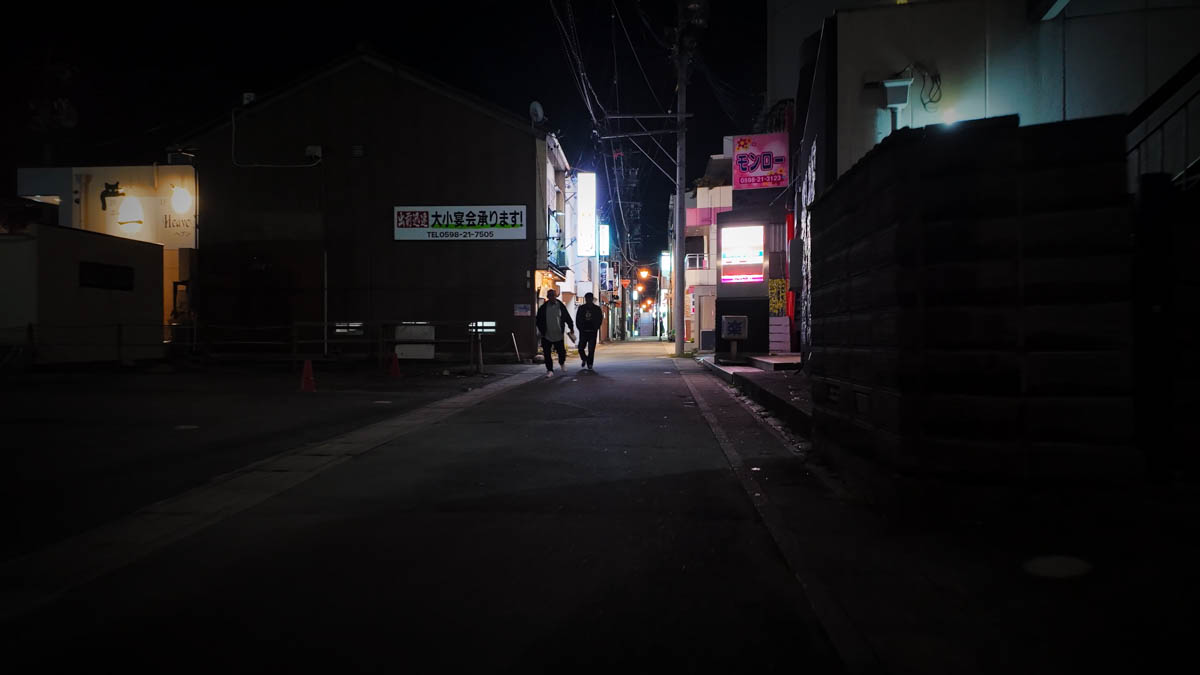
A short walk from the station brings you to a bar district. This area apparently flourished as a pleasure quarter in an earlier era. Most traces of that history are gone, but small snack bars are packed tightly together here.
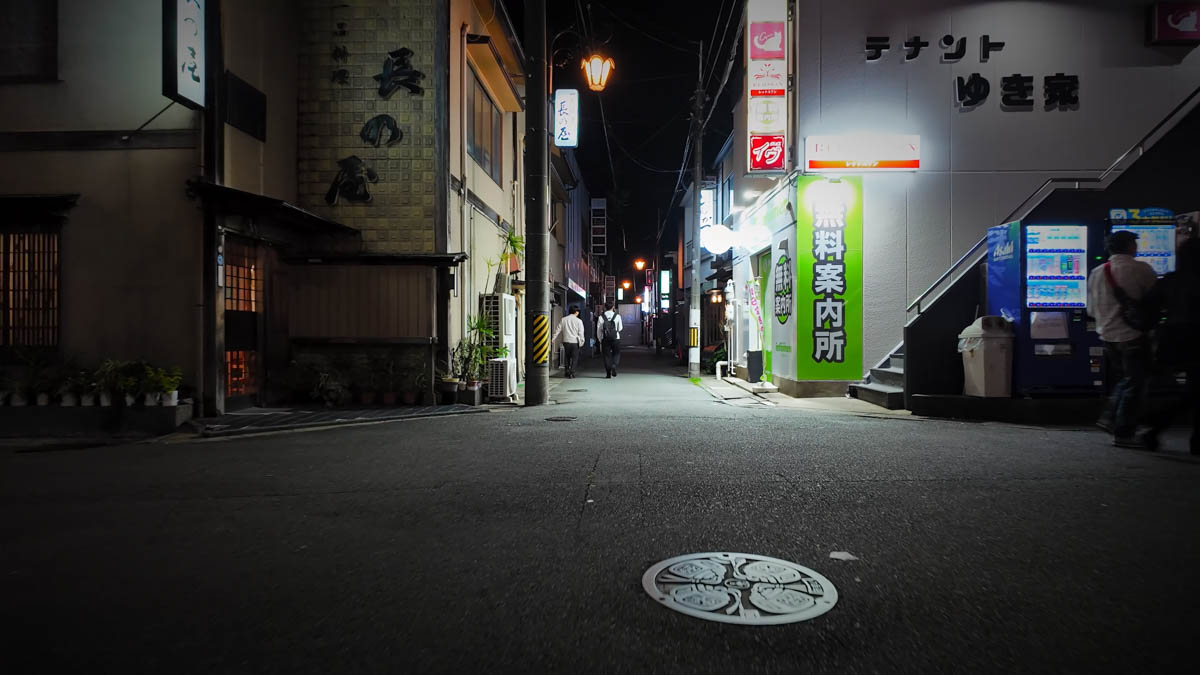
It's not a large area, but there was a free guide service booth.
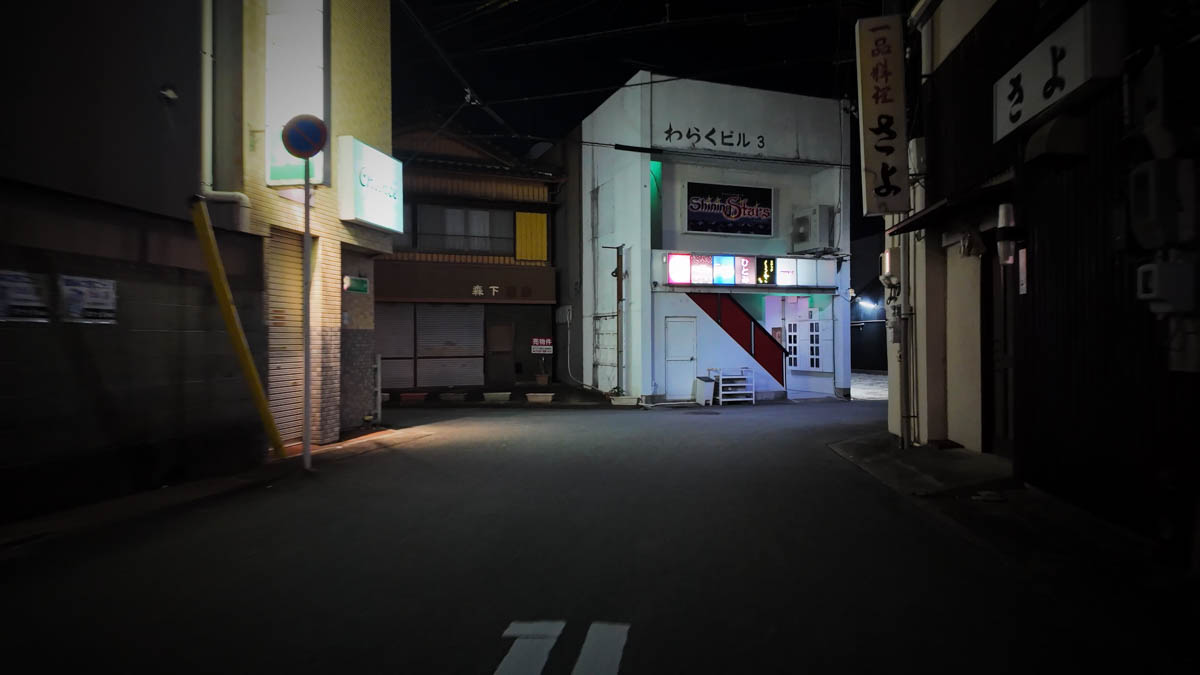
Hand-painted lettering on a building directory. Many of the listed venues bore women's names — a Showa-era feel to it.
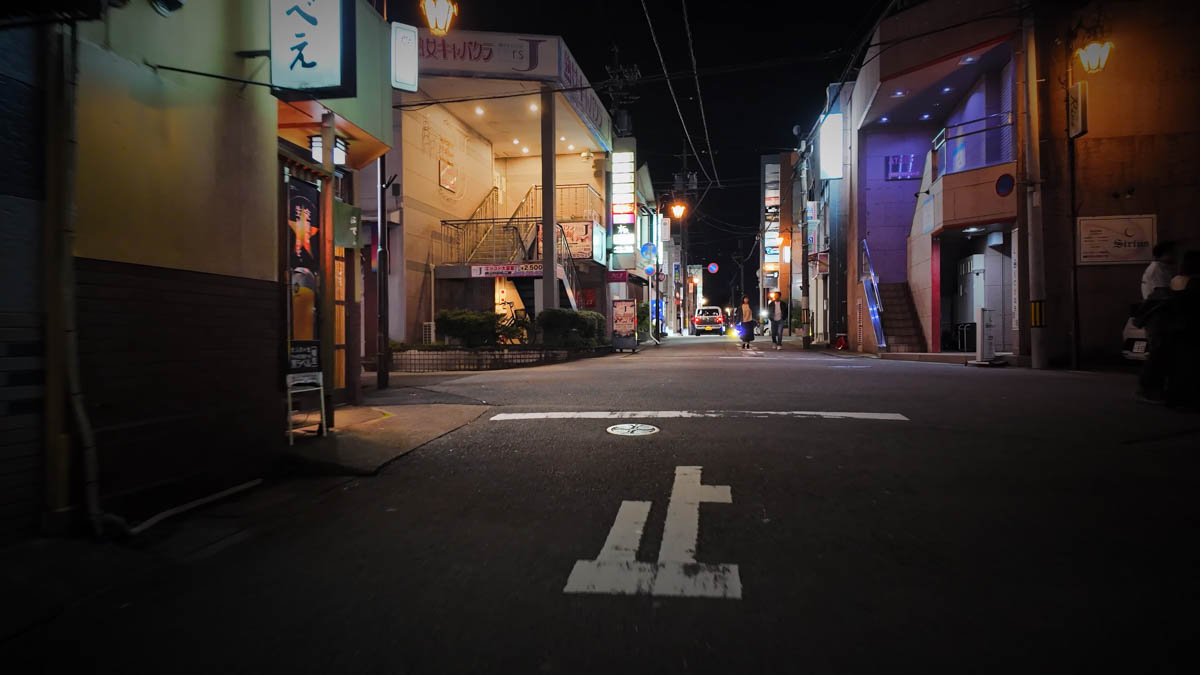
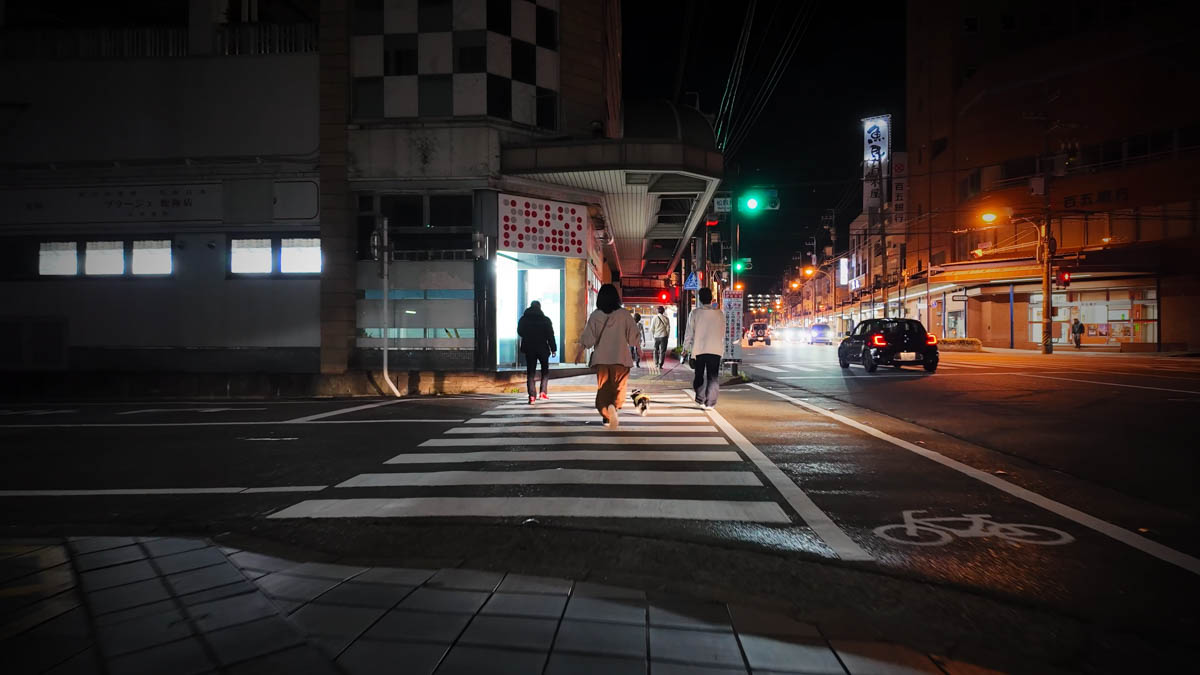
Foot traffic was sparse. A quiet night street.
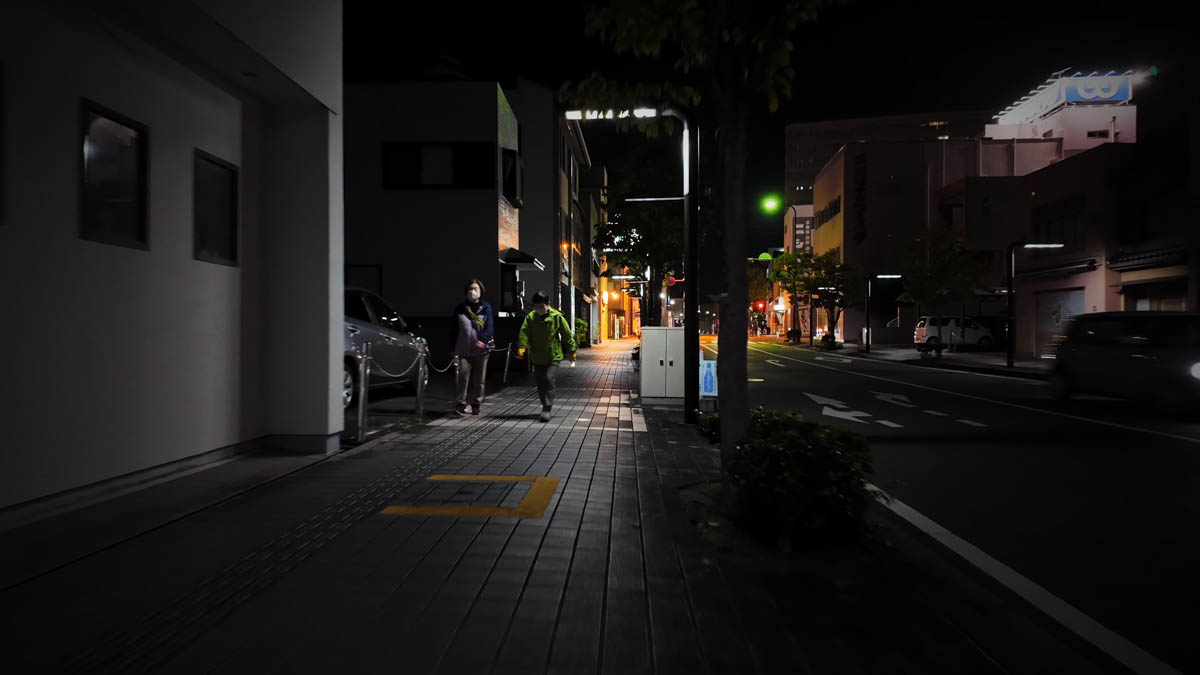
On the way back toward the station, I passed two women walking with a small torch, talking as they went.
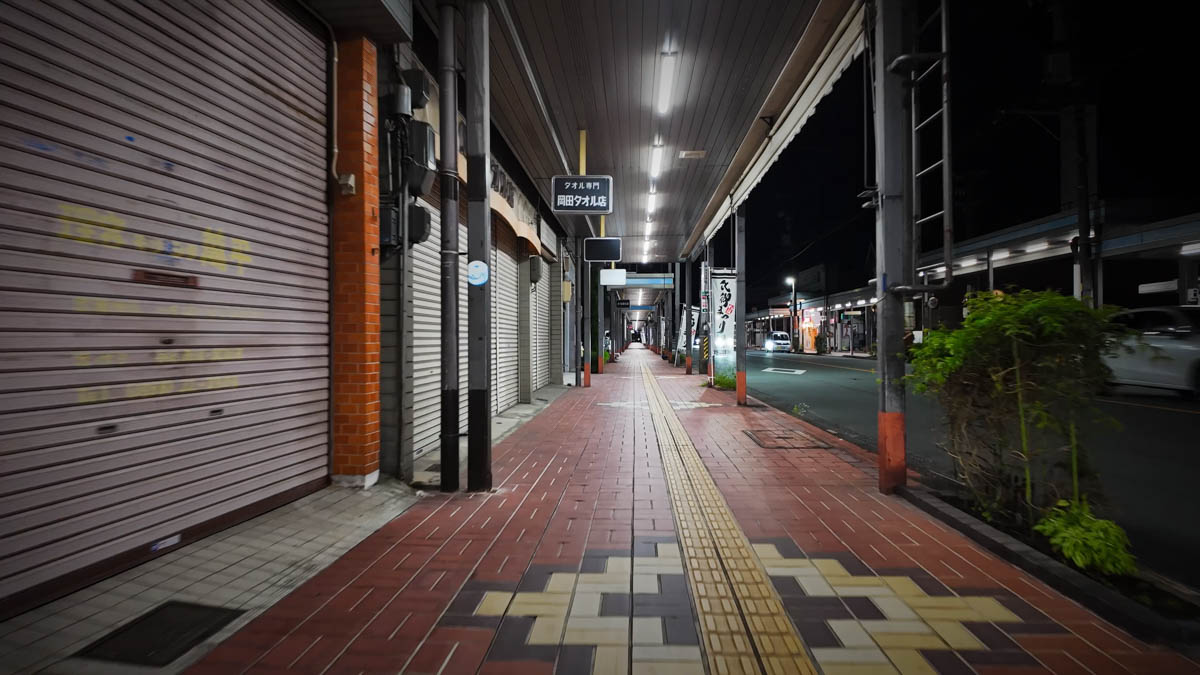
A little further from the station, shuttered shops became more common.
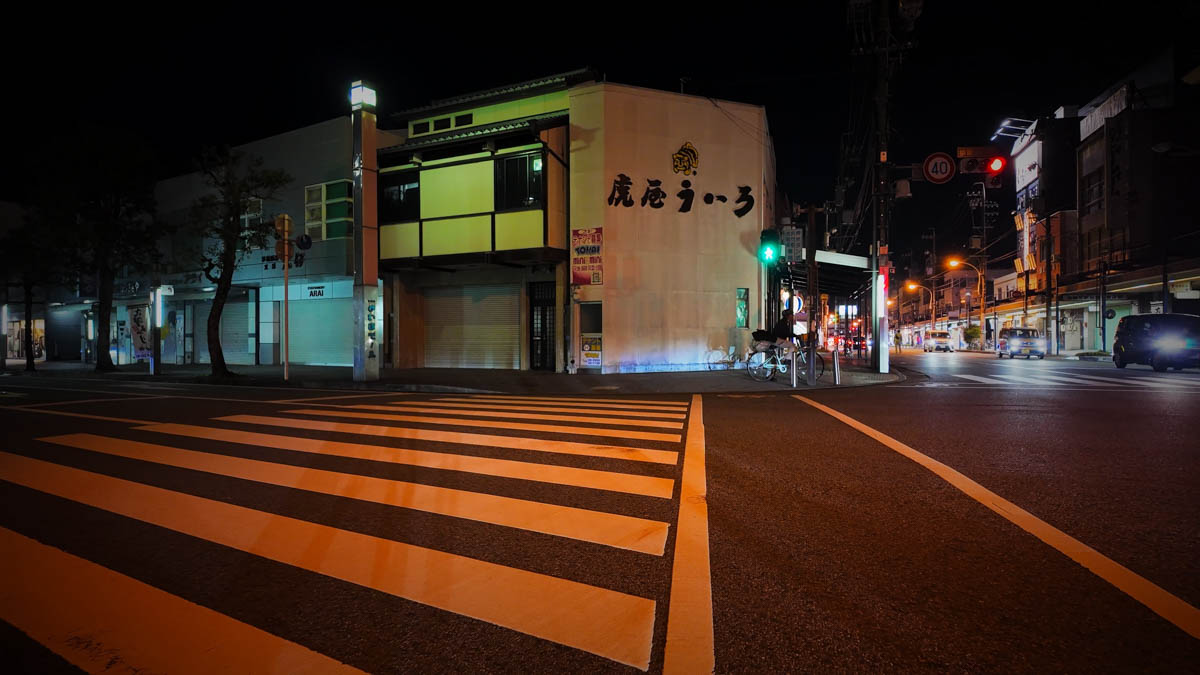
A confectionery shop had uiro — the traditional steamed wagashi — in the window. Nagoya is the name most associated with uiro, but Mie appears to have its own tradition. Perhaps a trace of the old Ise highway culture.
Walking Around Matsusaka Station — Video
If you enjoyed this post, the video is worth a watch too.
Subscribe to the Machidori ch YouTube channel.
![[Hida-Kanayama Station / Night Walk] (Gero City, Gifu) — The Labyrinthine Alleyways of a Town Said to Have Inspired SILENT HILL f](/images/2026/04/05/4/20260405_4_1.jpg)
![[Nagahama Station / Night Walk] (Nagahama City, Shiga) — Kurokabe Square After Dark and the Quiet Dining District of a Former Red-Light District](/images/2026/04/05/3/20260405_3_1.jpg)