【Tsuyama Station / Night Walk】(Tsuyama, Okayama) Drinking Streets with Year-End Party Groups Passing Through
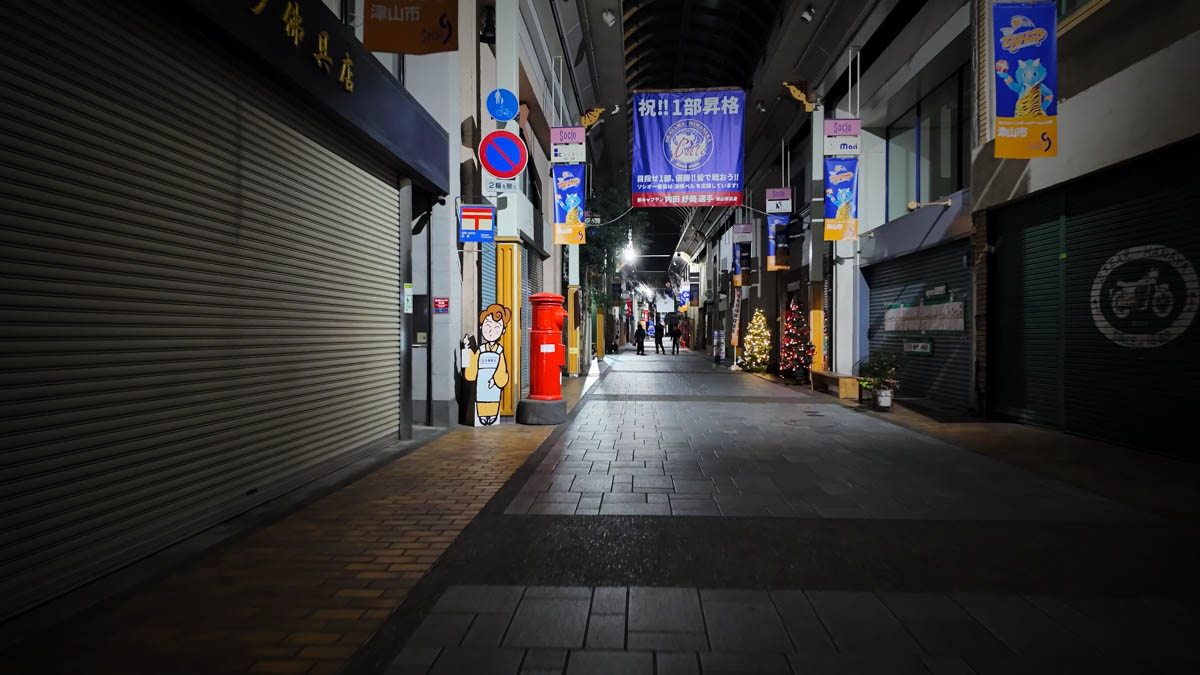
Visited: Friday, December 12, 2025
After walking around Kuse in Maniwa, Okayama Prefecture, I headed back east to neighboring Tsuyama. Within Okayama Prefecture, Tsuyama is the largest city in the northern part of the prefecture, after the much larger cities of Okayama and Kurashiki.
Its population is now in the 93,000 range. It once had more than 100,000 residents, but has finally fallen below that line. Historically, the town developed from the castle town of the 100,000-koku Tsuyama Domain during the Edo period, and even at night the city still gives off a sense of order and calm that feels connected to that background. This was my fifth visit to Tsuyama in total.
Like Kuse, Tsuyama developed along the old Izumo Kaido route. At the same time, it faces a familiar problem for many regional cities in Japan: suburban shopping centers still draw steady traffic, while the central shopping district struggles to keep the same energy. Tenmaya, a department store chain based in Okayama, also stands in the city center as a core tenant of a redevelopment project, but it seems to be having a difficult time.
Access to Tsuyama from Okayama Station is by the JR Tsuyama Line, taking about 1 hour and 15 minutes. The rapid "Kotobuki" service can make the trip a little shorter. From the Osaka and Kobe direction, the route via Himeji and the JR Kishin Line takes roughly two and a half hours. Either way, it is a local-line journey, and that is part of the experience.
Around the Station
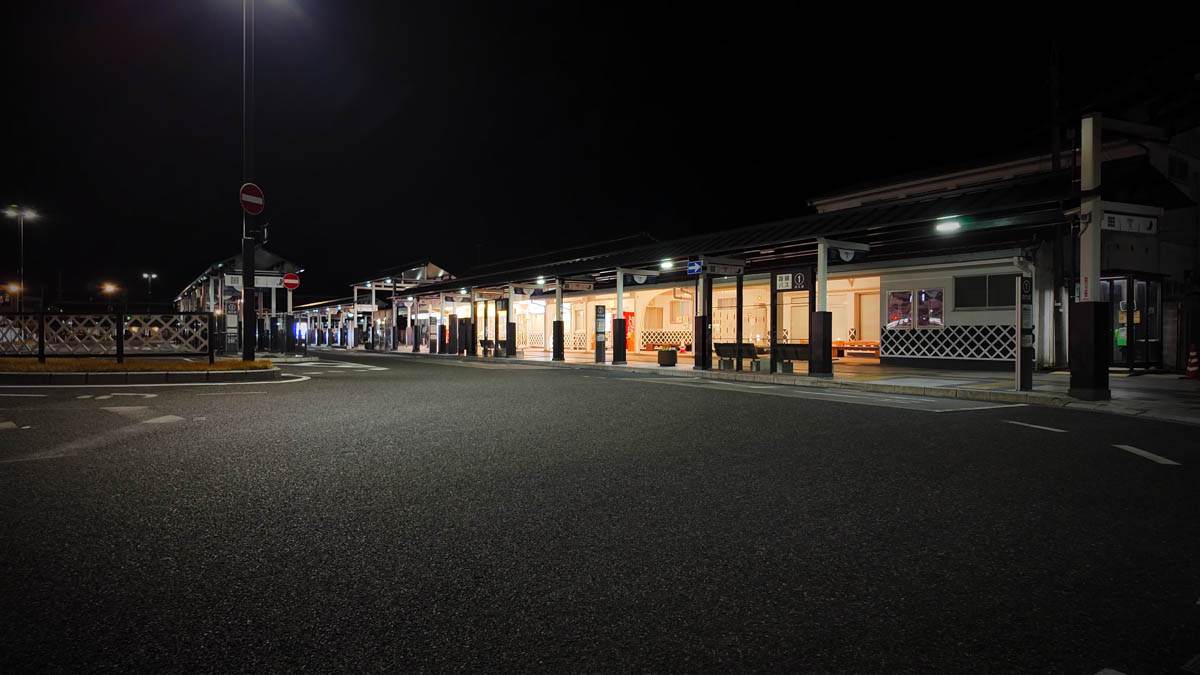
Tsuyama Station is served by three JR lines: the Kishin Line, the Tsuyama Line, and the Imbi Line. The station building was renovated inside and out in 2024, and the exterior still looks fresh. Its design takes cues from Tsuyama Castle.
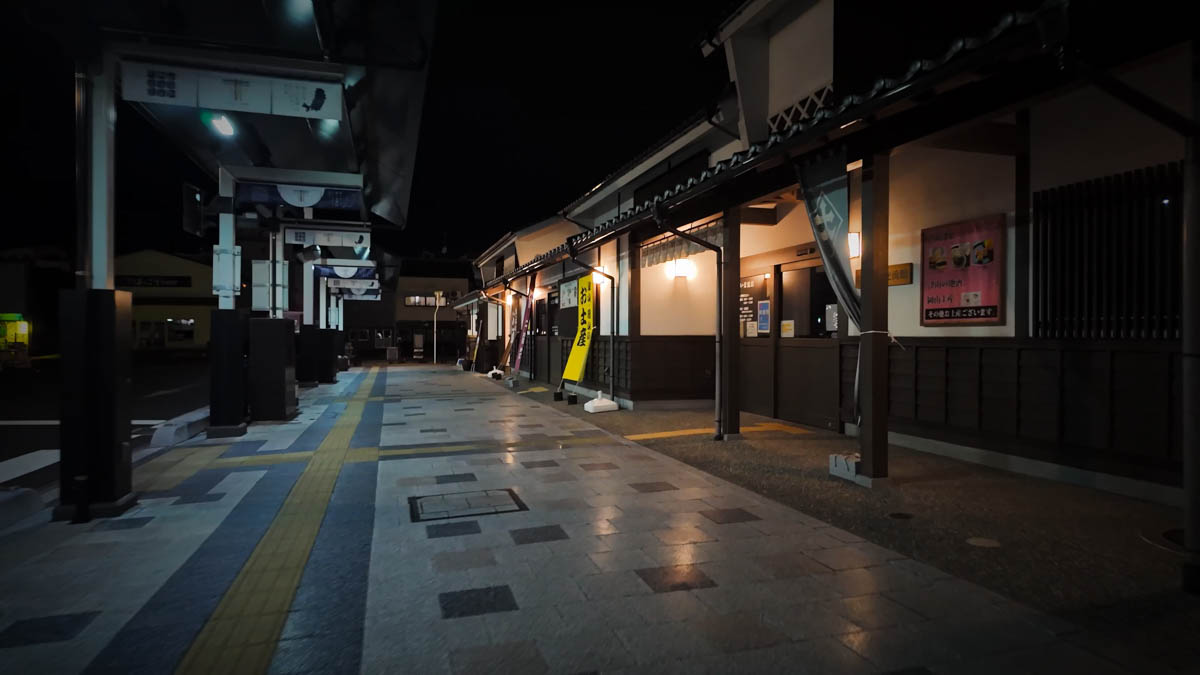
The tourist information center and Nigiwai Exchange Hall next to the station share the same visual language as the station building.
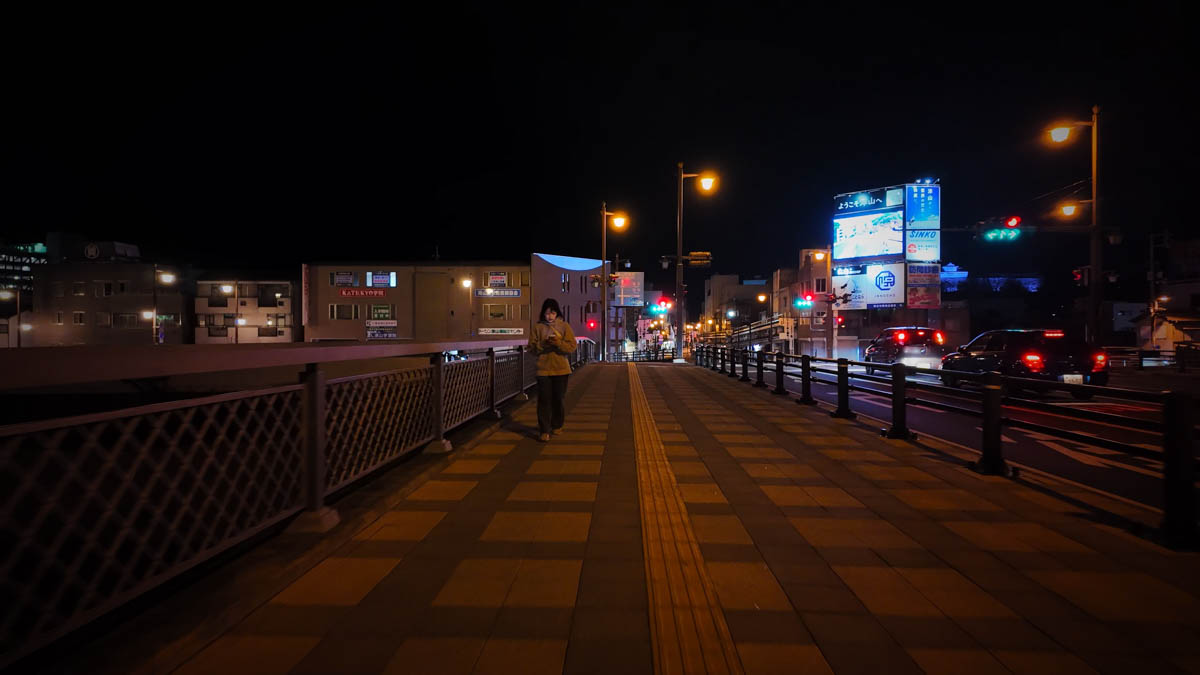
To reach the city center from the station, I crossed Imazuyabashi Bridge over the Yoshii River.
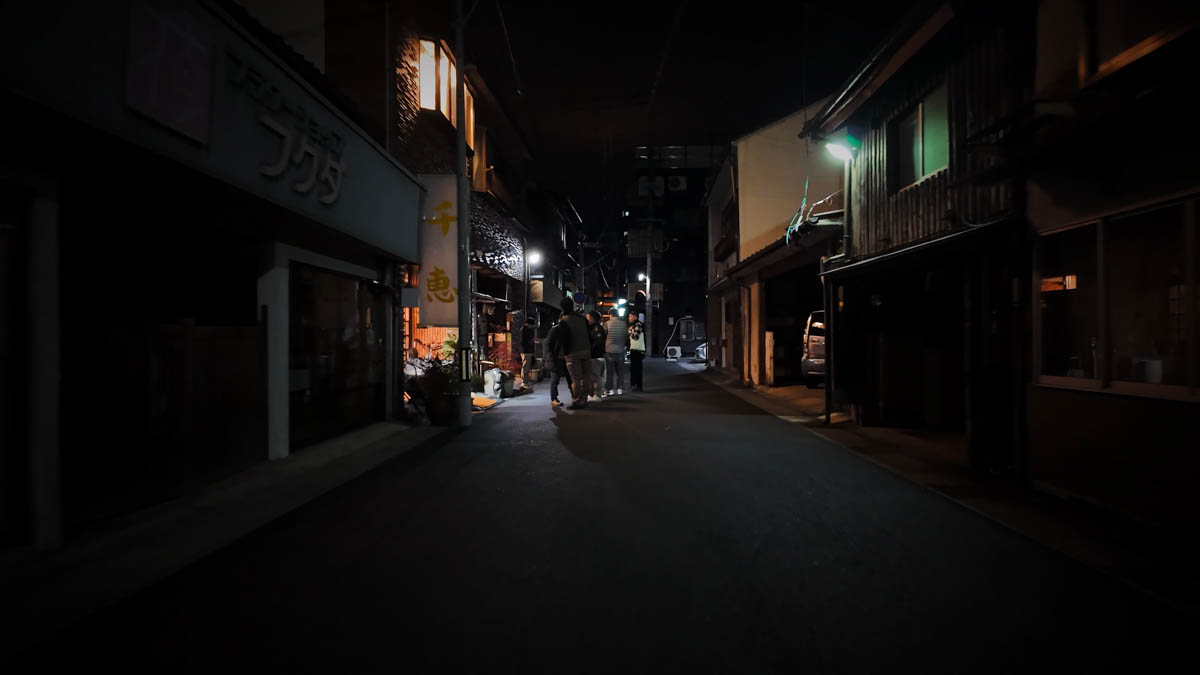
When people talk about yakiniku in Tsuyama, Chie is one of the names that seems to come up immediately.
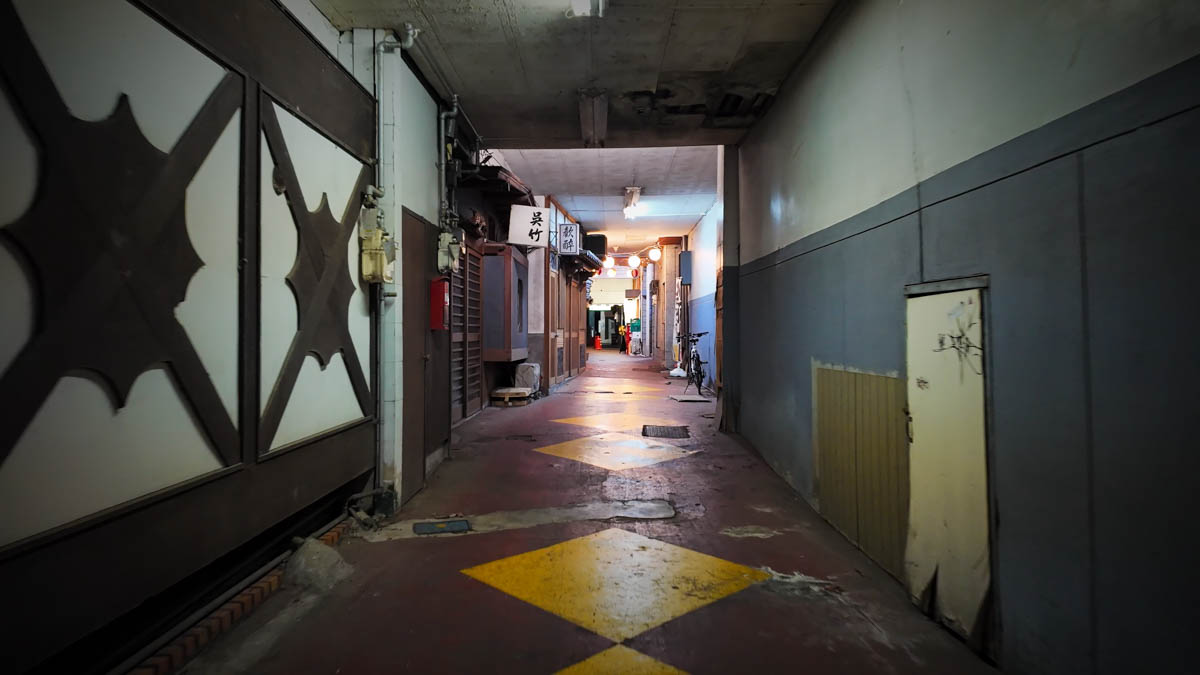
This passage runs through the inside of a building and feels almost like a small yokocho alley. It has an old, nostalgic atmosphere.
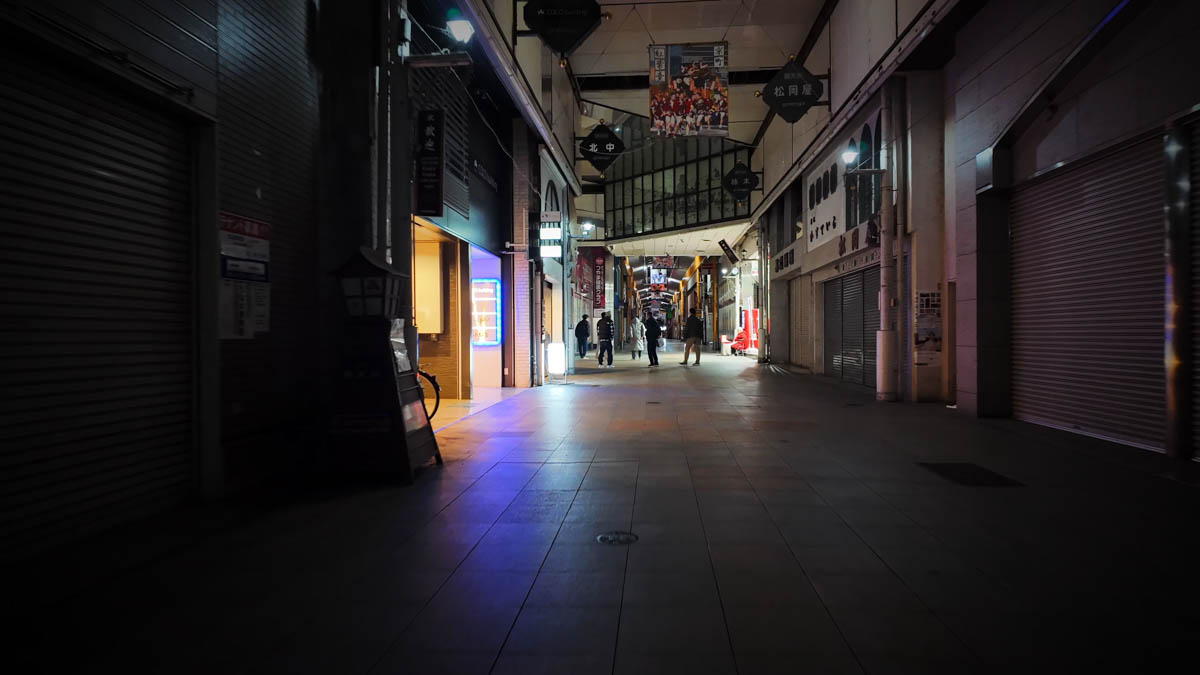
Tsuyama's city center has a well-developed network of covered shopping arcades. Several shopping streets connect with one another, and the total length probably stretches for several kilometers. The area still carries traces of its former strength as a regional city shopping district. Even though there are more closed shutters now, some shops were still lit at night. Sections of the arcade preserve Showa-era signs and building facades, making the passage of time visible as you walk.
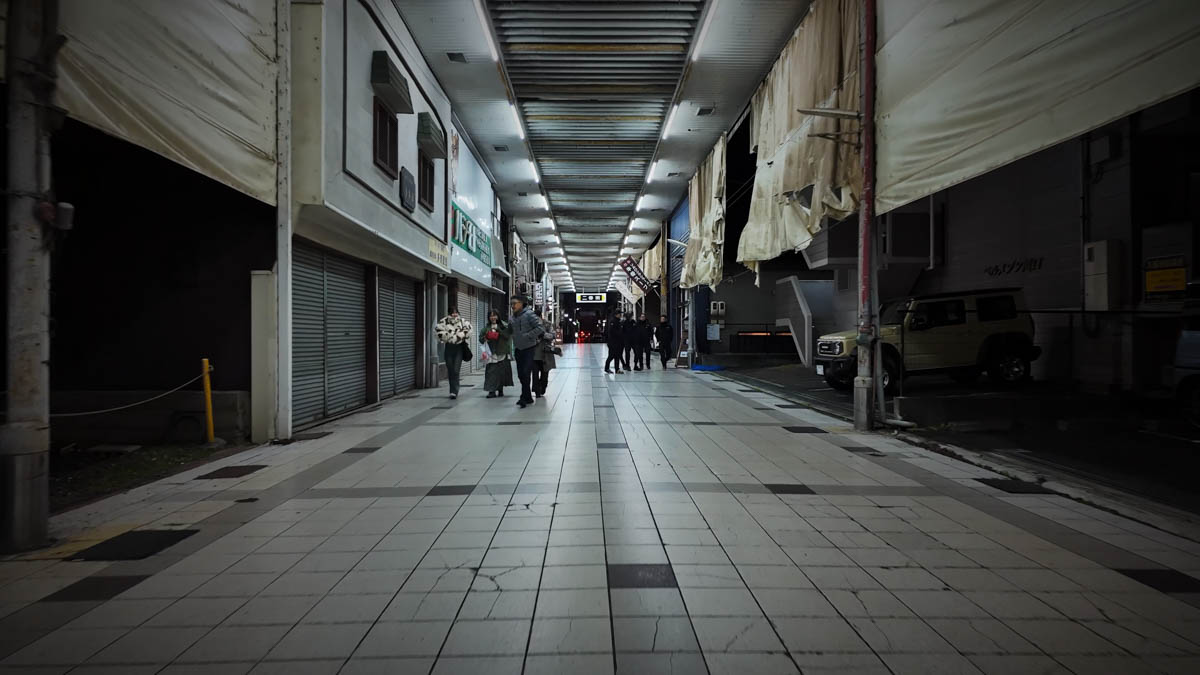
It was a Friday night in December, so perhaps these were people coming back from a year-end party.
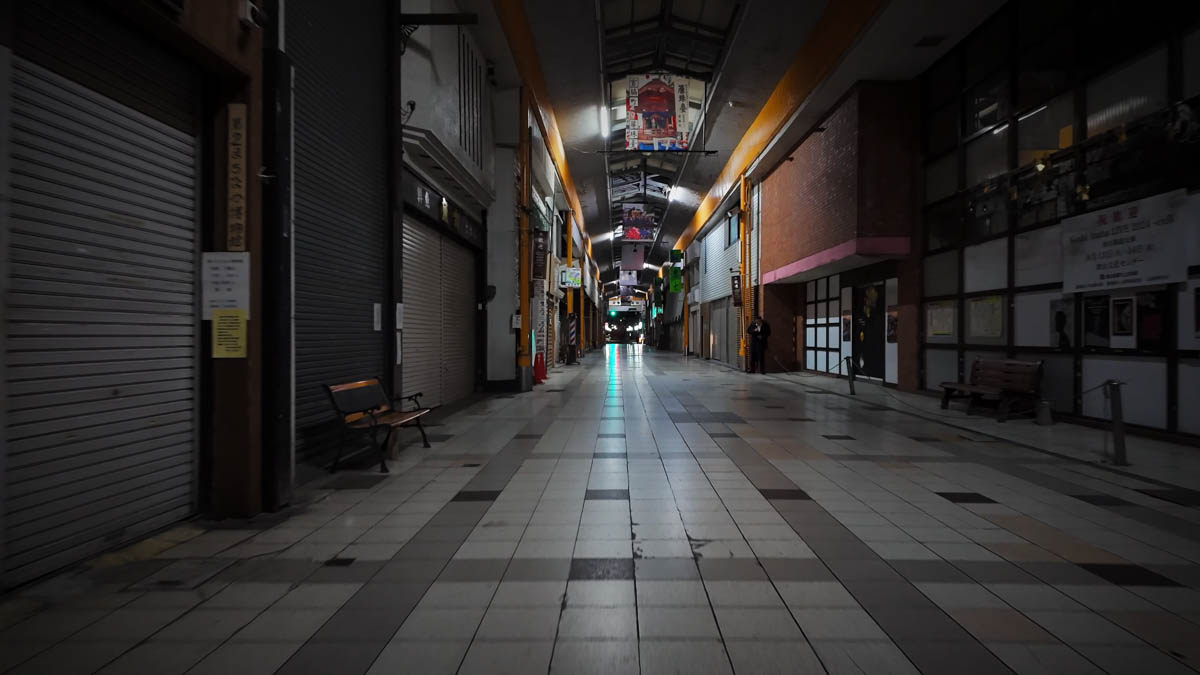
There were people here and there, but the overall feeling of the night was quiet.
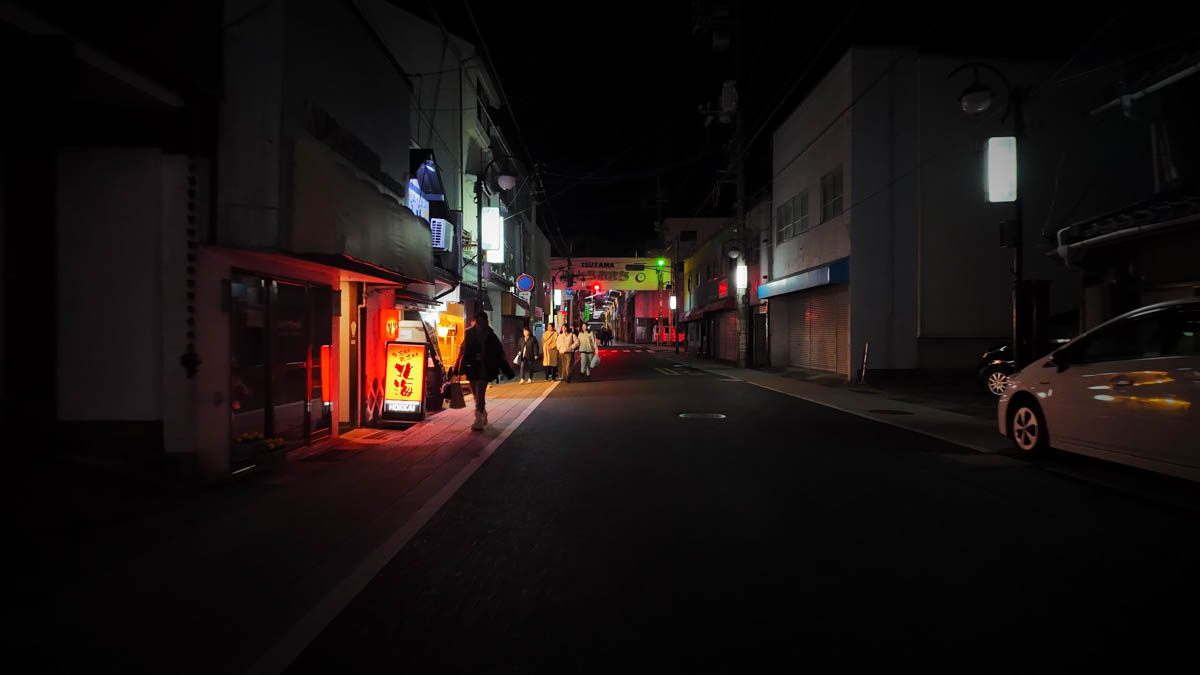
This was a restaurant area just outside the covered arcade. A group was walking along, perhaps looking for a second place to continue the evening.
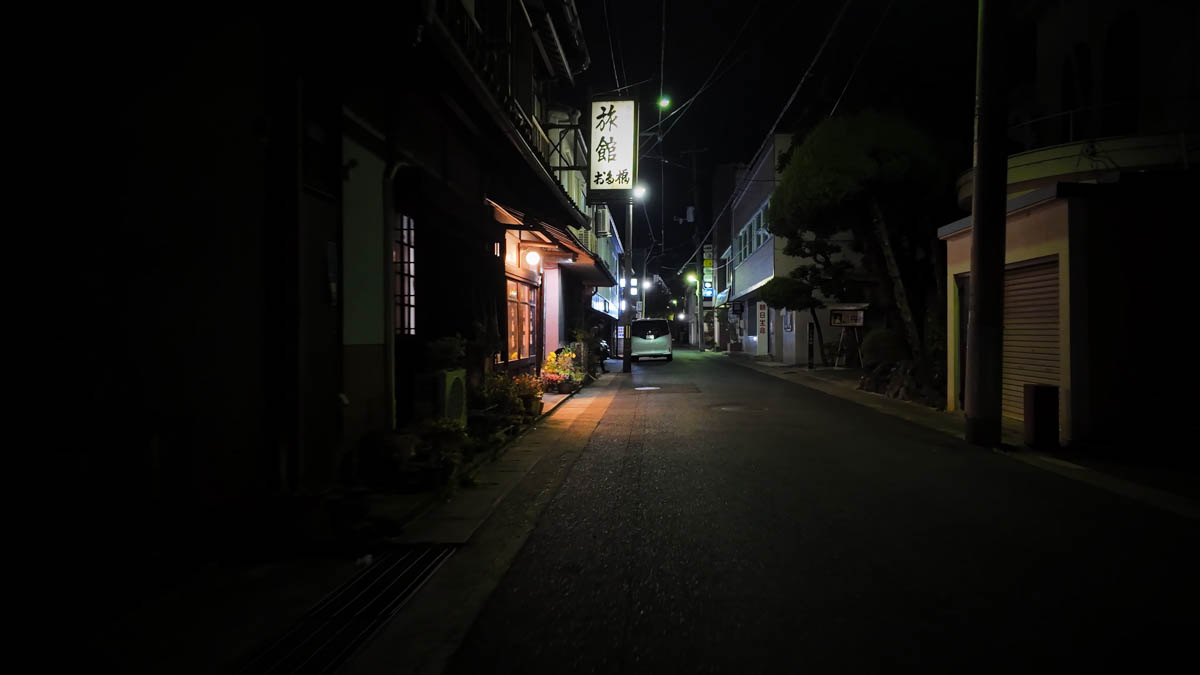
A tasteful sign and building caught my eye: a ryokan called Otafuku. I later checked its website, and the food looked good too.
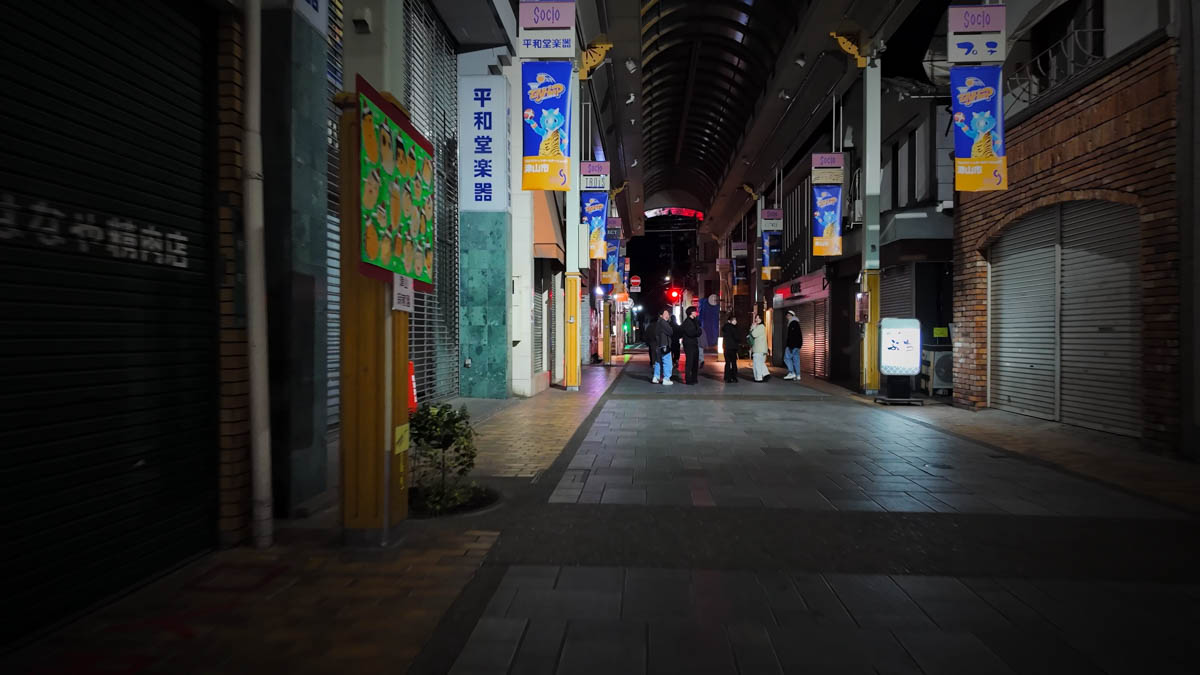
I returned to the first covered shopping arcade.
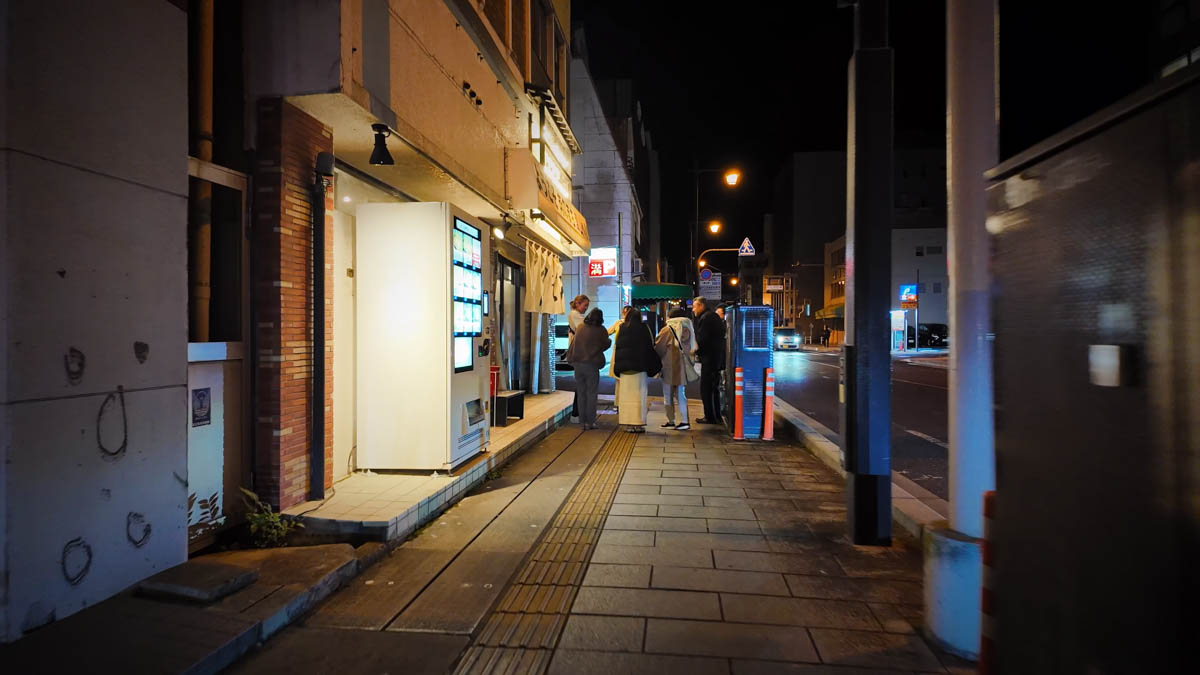
On Imazuyabashi-dori, also known as Gongo-dori, people were gathering along the main street as well.
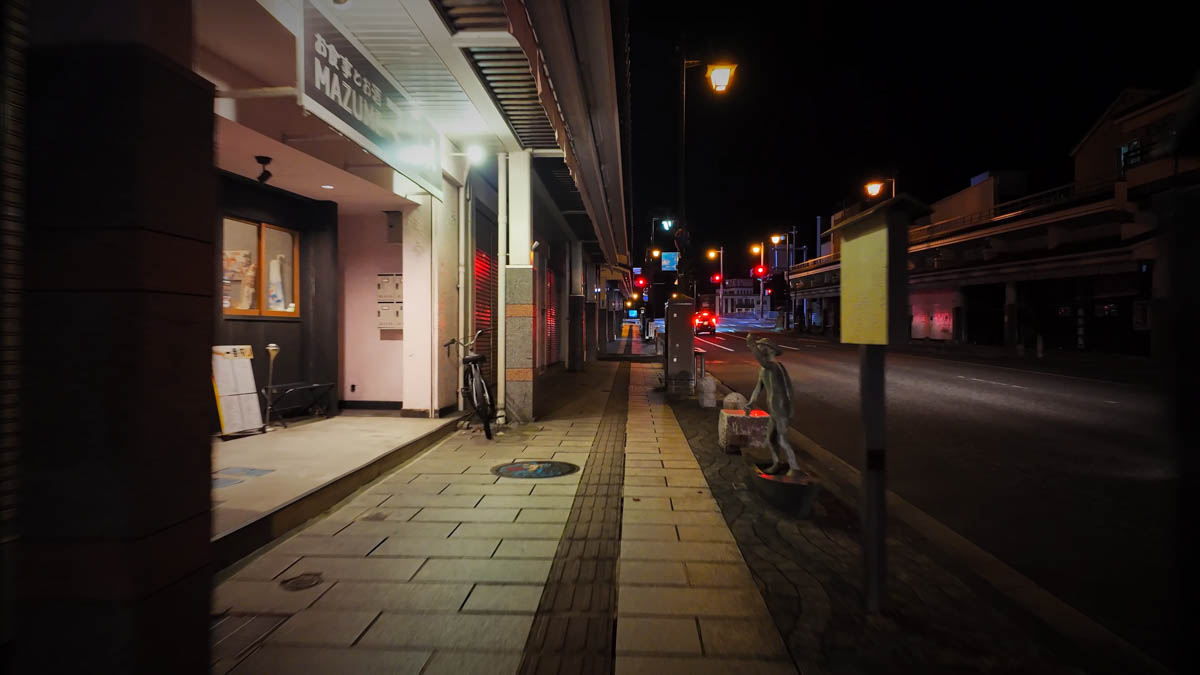
On the sidewalk stands a statue of a gongo, a kappa-like creature said in local legend to have lived in the Yoshii River.
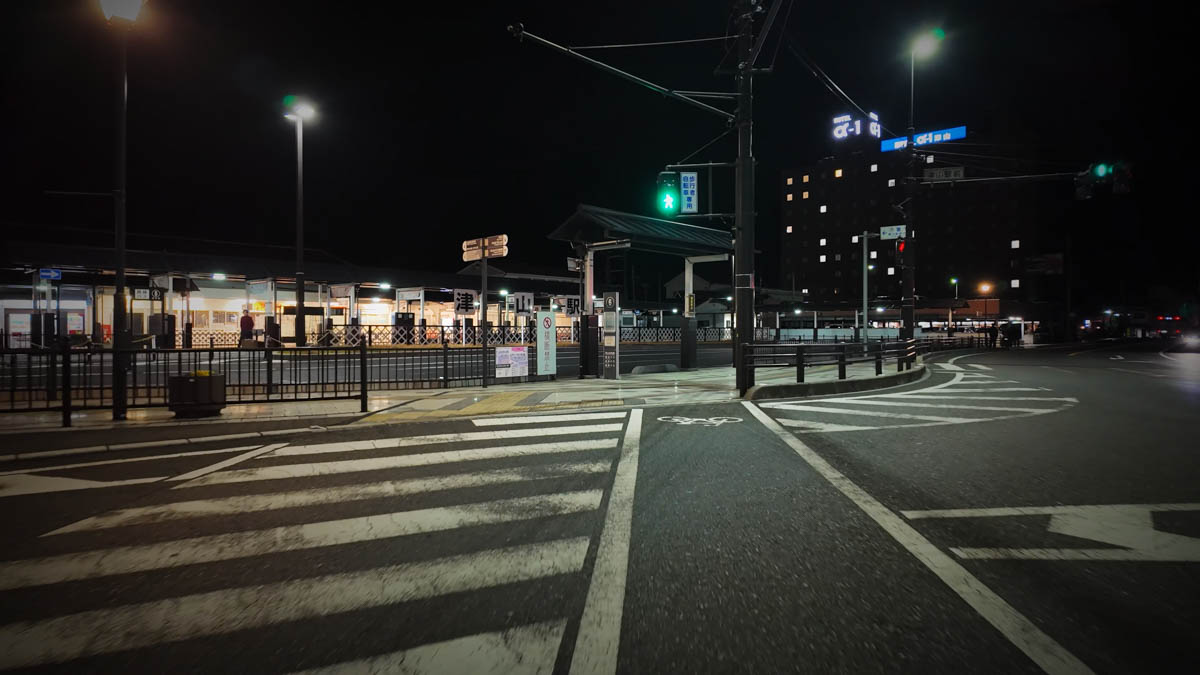
Tsuyama at night is quiet. Walking through the arcades and along Gongo-dori, the old structure of the castle town still feels intact. The food culture is appealing, and the atmosphere is strong. Behind the numbers showing population decline, I felt something like the underlying strength of the town. Then I returned to the station.
Walking Around Tsuyama Station
I hope you'll enjoy this video alongside the post.
Consider subscribing to The Street Archive | MACHIDORI YouTube channel.