Home
Home
【Takaoka Station / Night Walk】(Takaoka, Toyama) Late-Night Shopping Streets and the Manyo Line Tram
Visited: Thursday, April 18, 2024
Looking back through my travel notes from two years ago, I was moving northward from Osaka, passing through Kyoto and Shiga before reaching the Hokuriku region. After taking in the Sea of Japan coast, I arrived in Takaoka, Toyama Prefecture. It may have been my first visit since coming here alone for a university entrance exam as a high school student — staying in a business hotel, seeing almost nothing of the city.
Takaoka has a population of roughly 157,000, down from a peak of over 188,000. Like many regional cities, it has been on a declining trend. The city developed as a castle town around Takaoka Castle, built by Maeda Toshinaga, the second lord of the Kaga Maeda clan. It is known for traditional crafts such as Takaoka copperware, which accounts for about 90 percent of national production, and Takaoka lacquerware. The city is well connected to Kanazawa and Toyama, and with a Shinkansen station nearby, Tokyo is less than three hours away.
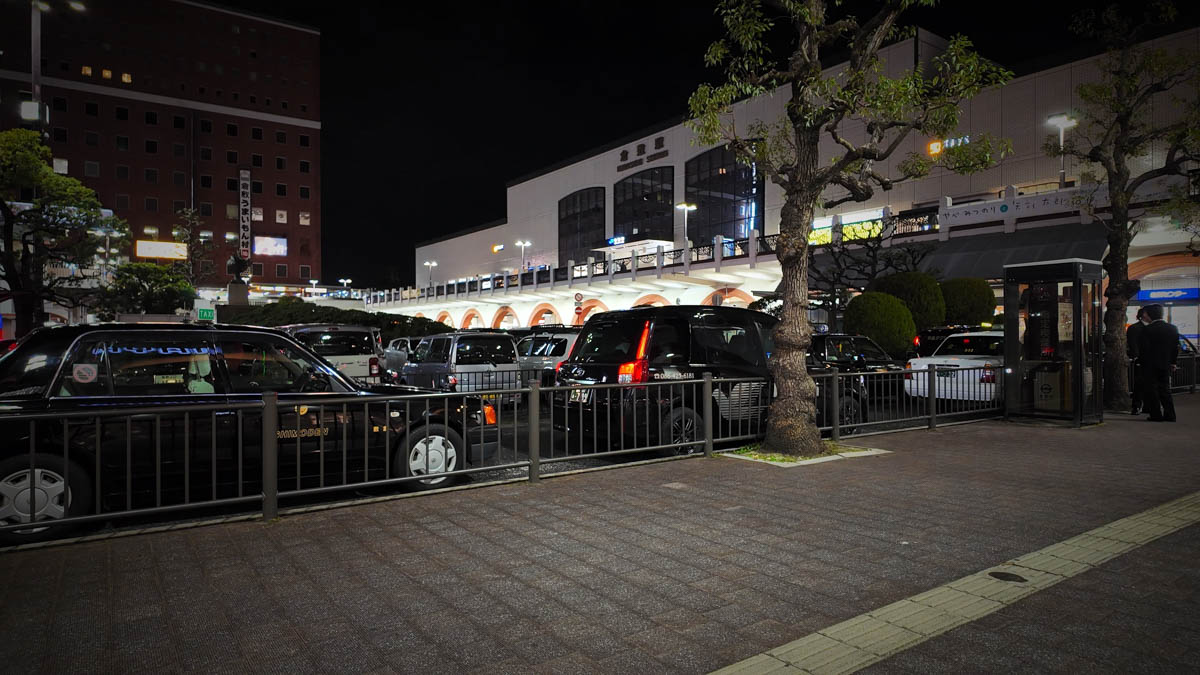
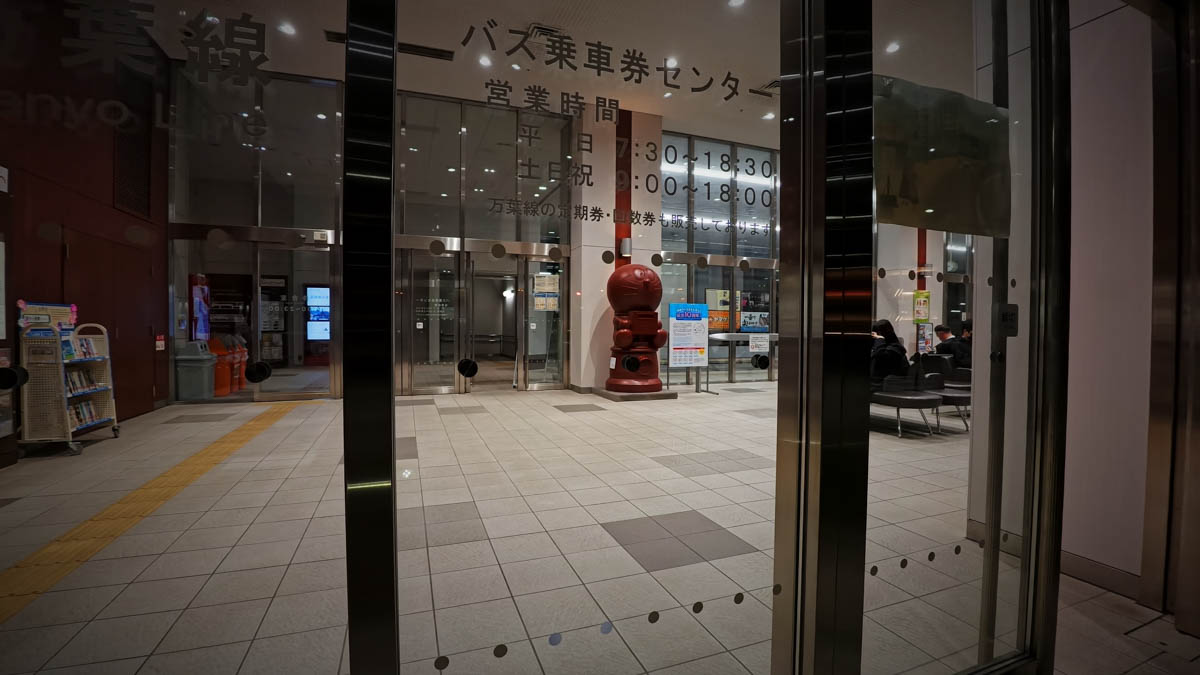
The central station, Takaoka Station, has a somewhat faded feel, but Shin-Takaoka Station — the Shinkansen stop — is right next to the large Aeon Mall Takaoka, which draws a steady crowd. I came to see the dining and entertainment streets and the covered shopping arcades that remain close to Takaoka Station. The red Doraemon figure in the first photo is the "Doraemon Post," a mailbox in the shape of the beloved character. Takaoka is the hometown of Fujiko F. Fujio, the creator of Doraemon, and spots connected to the series are scattered throughout the station area. The "Doraemon Tram" that runs on the Manyo Line is also well known — though I did not manage to see it on this particular day.
Around the Station
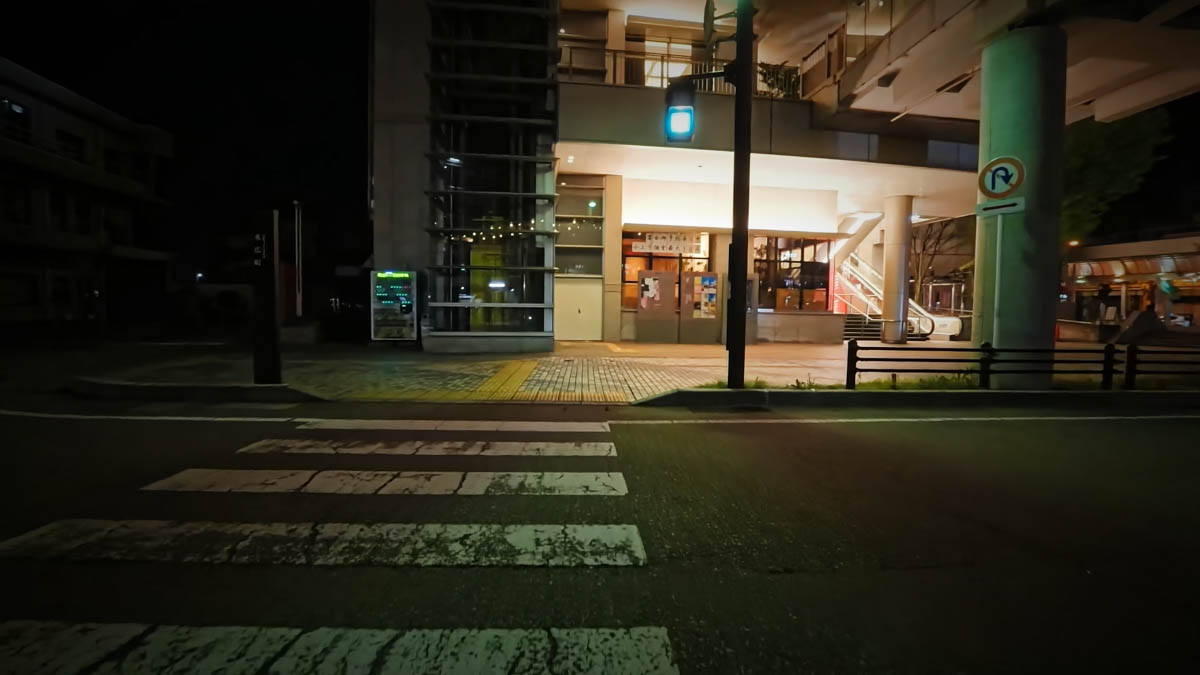
Across the pedestrian crossing from the station entrance stands Wing Wing Takaoka, a mixed-use facility housing public services and private businesses, including a hotel and the city library. The "Doraemon Promenade" — a line of character monuments originally located elsewhere — has been relocated here.
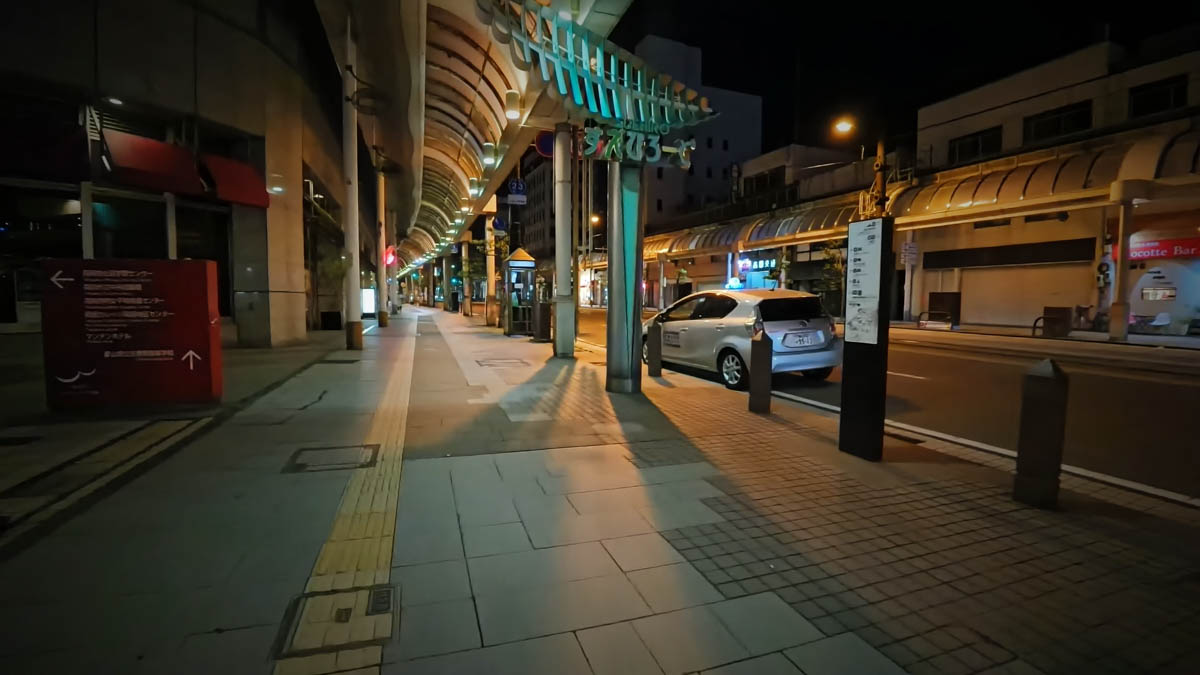
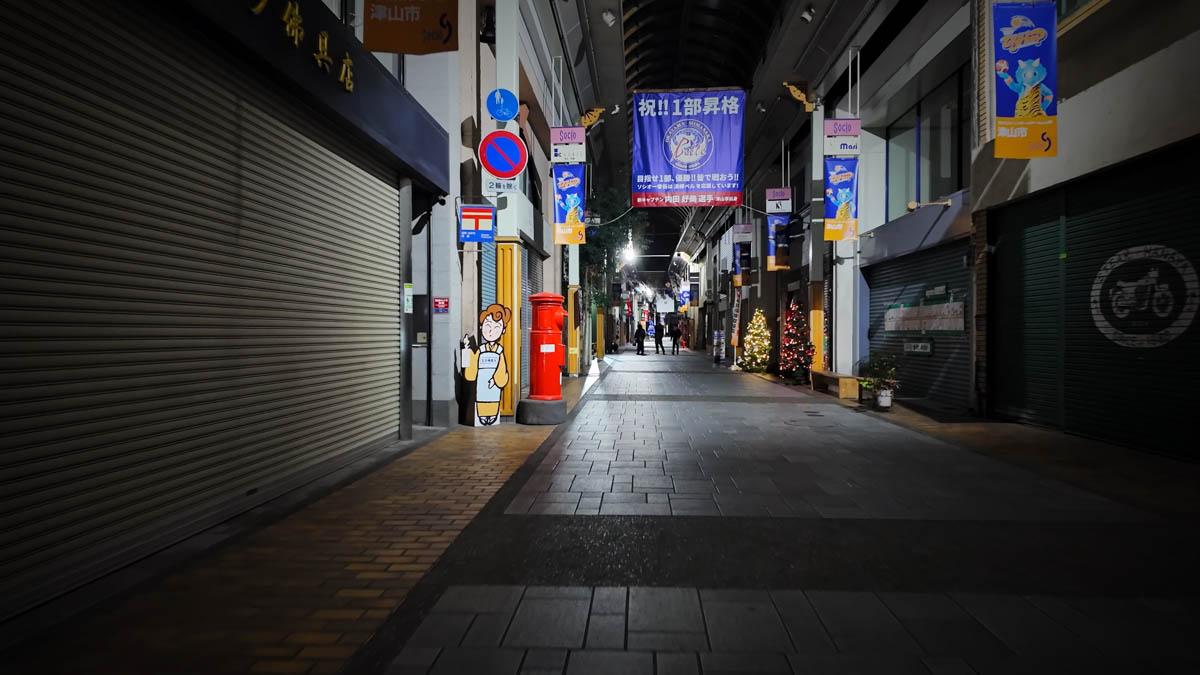
The arcade stretches out from in front of the station. Its gently arching roof is a distinctive feature. There is no one in sight.
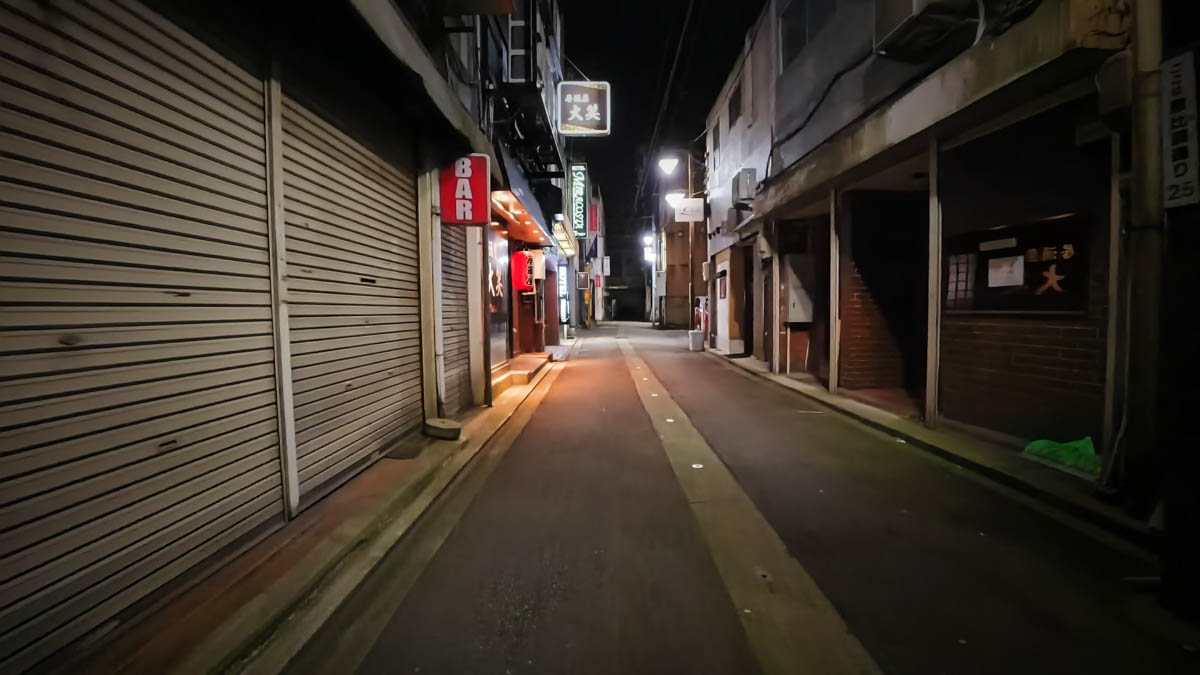
After crossing at the traffic light and turning off the arcade street, I entered an alley leading into the entertainment district.
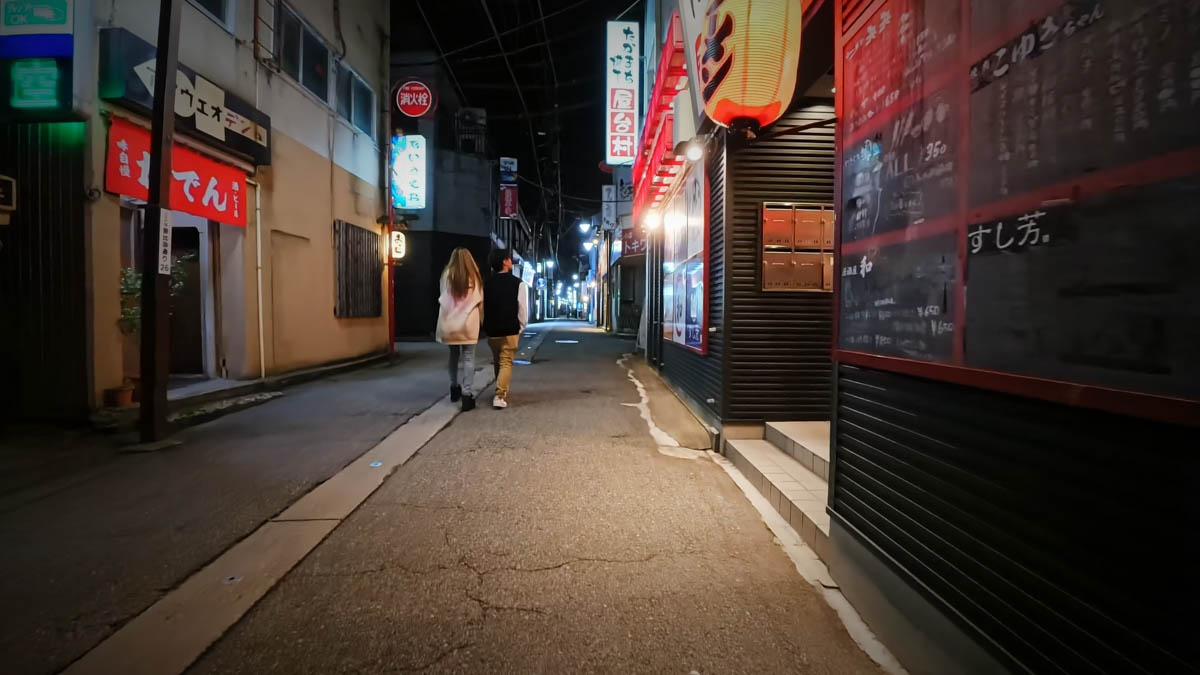
The entertainment district was still quiet — it was a little early in the evening, and few people were around.
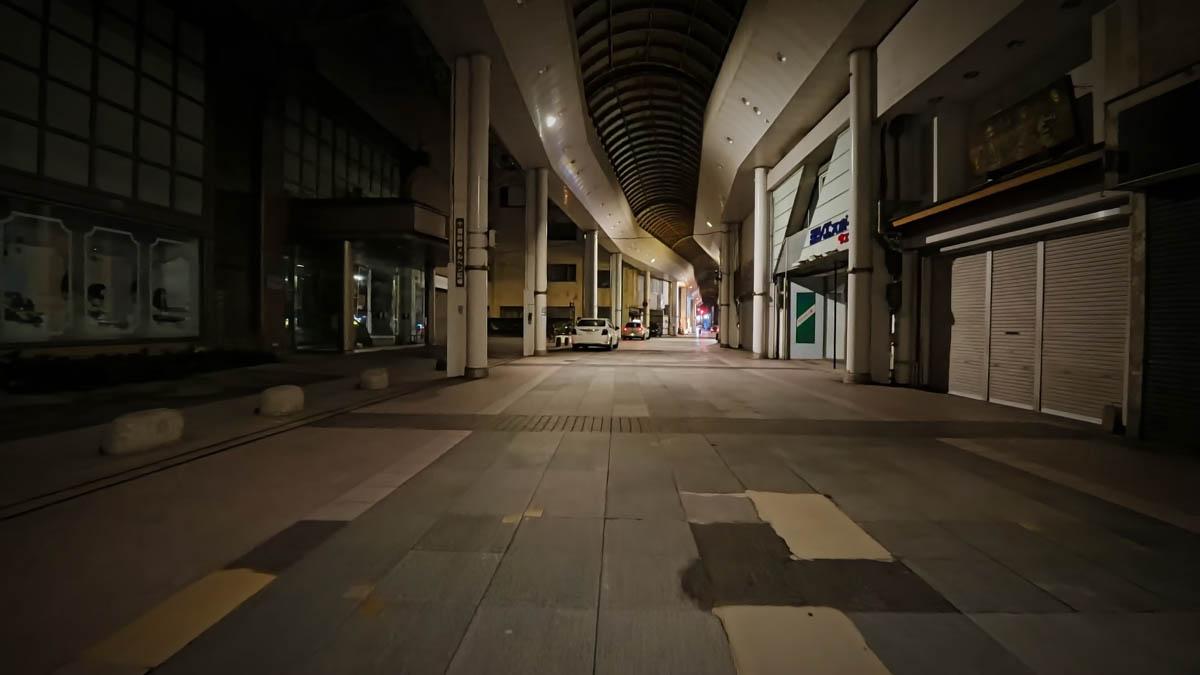
Walking from the station toward Otabisho Serio, I reached a large covered arcade. Otaya-dori is read "otayadori." It was not that late, yet there were almost no pedestrians. The darkened space to the left is Otabisho Serio. A major department store, Yamato Takaoka, closed here about seven years ago — at the time, it was the largest department store in Toyama Prefecture — and though the building became a mixed-use complex, it has a noticeably deserted feel.
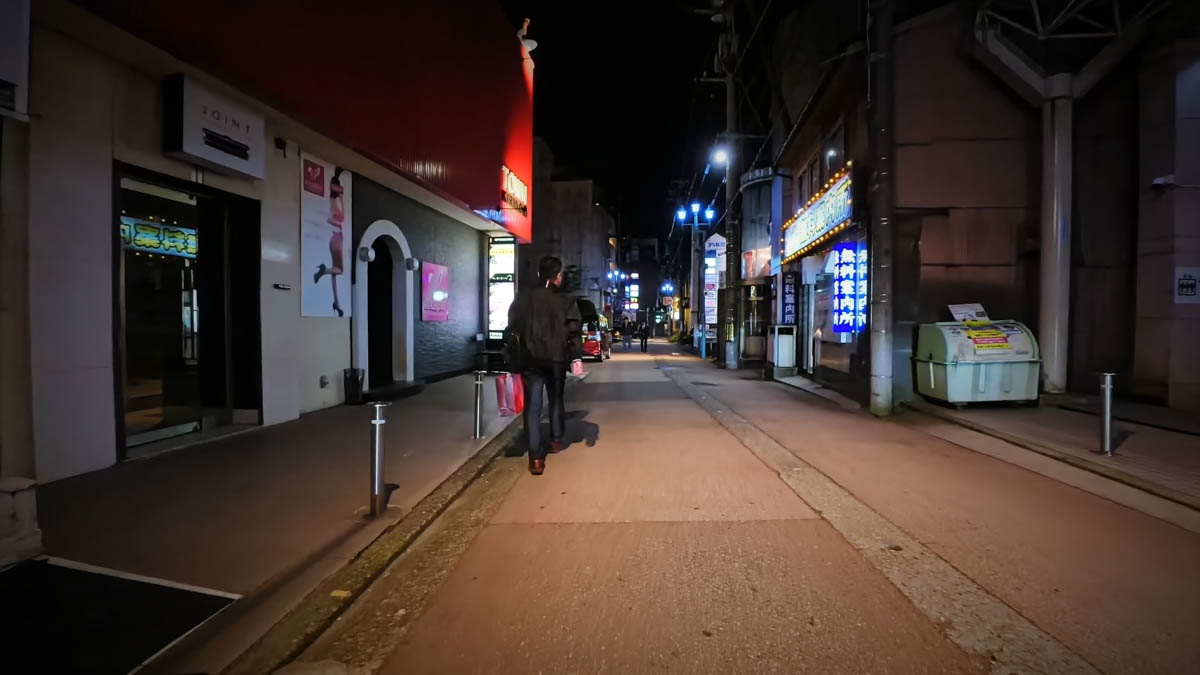
Walking back toward the station from Otaya-dori, signs for a "free information booth" and similar businesses confirm that this is the entertainment district.
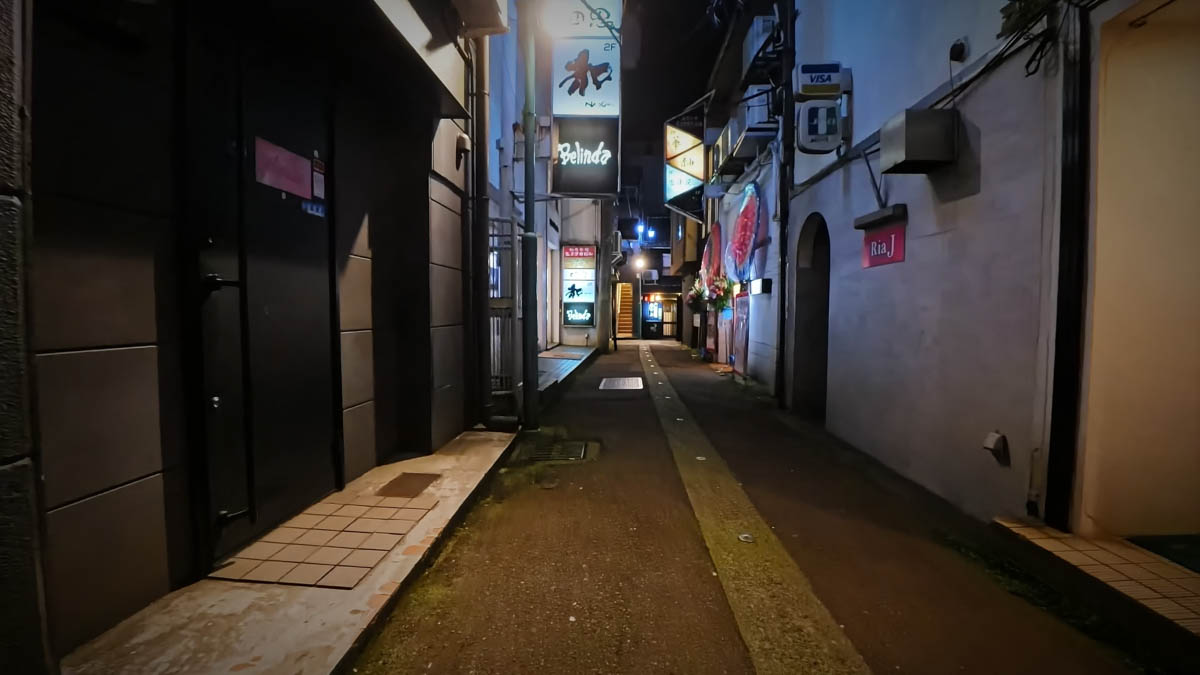
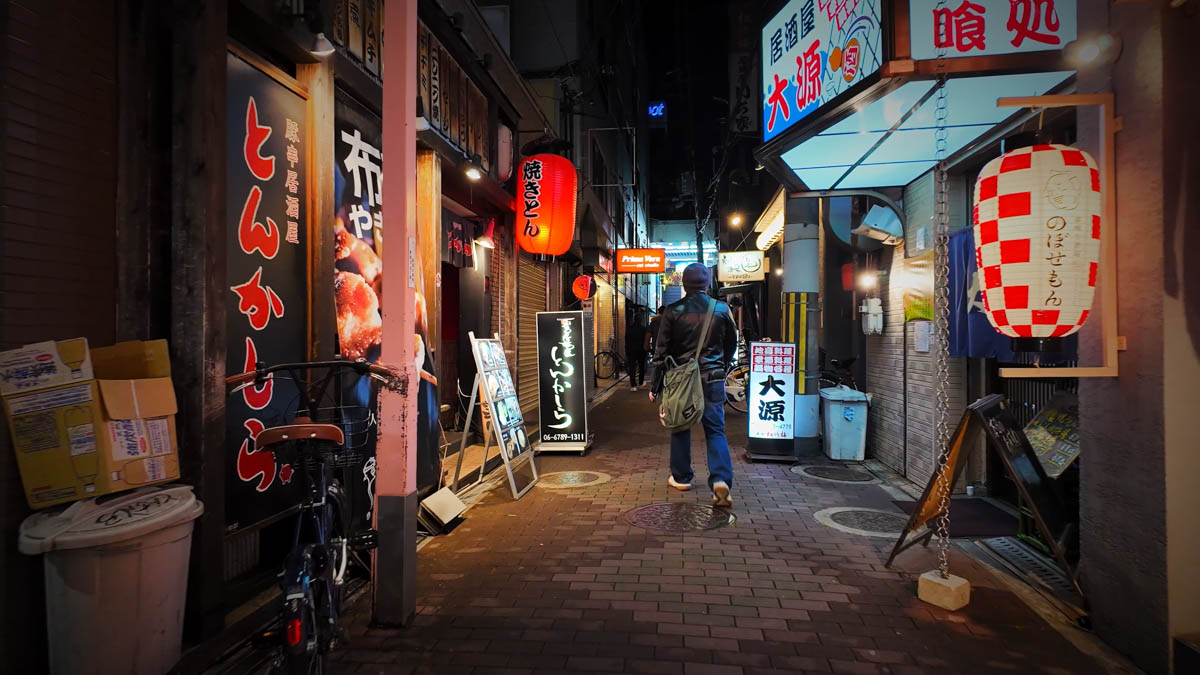
A narrow alley packed with snack bars and clubs. The Showa-era atmosphere is strong, and the alley's tight width is the kind that draws you in.
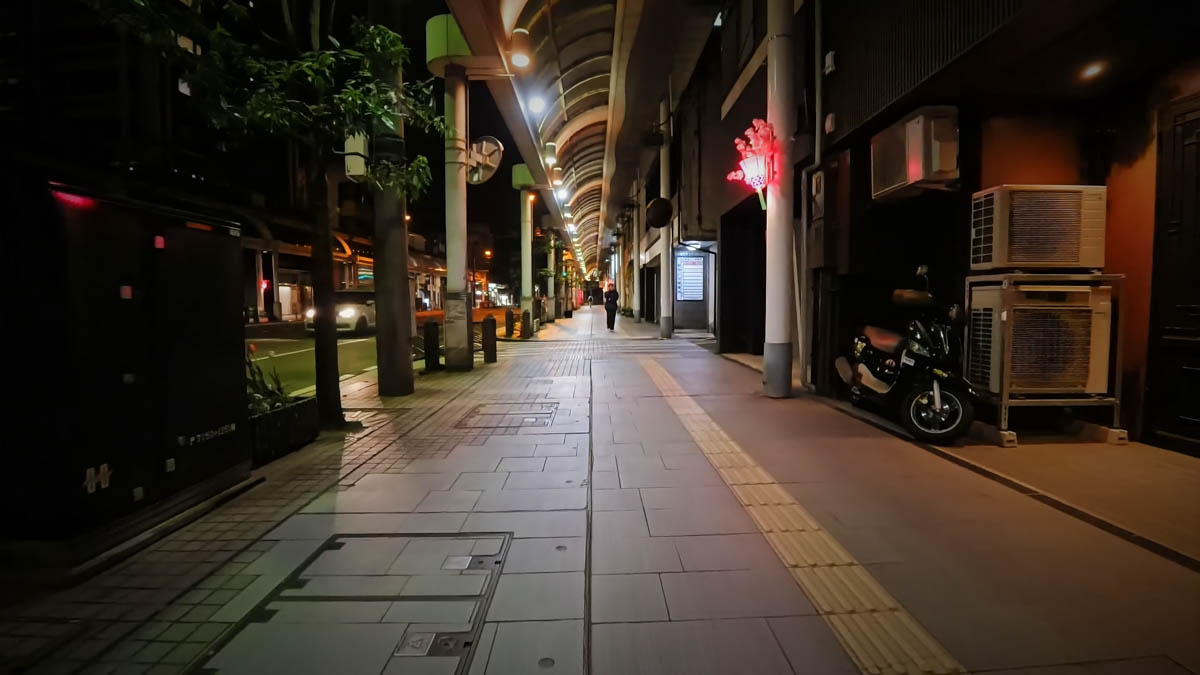
Back at the arcade near the station entrance. Occasional passersby, nothing more.
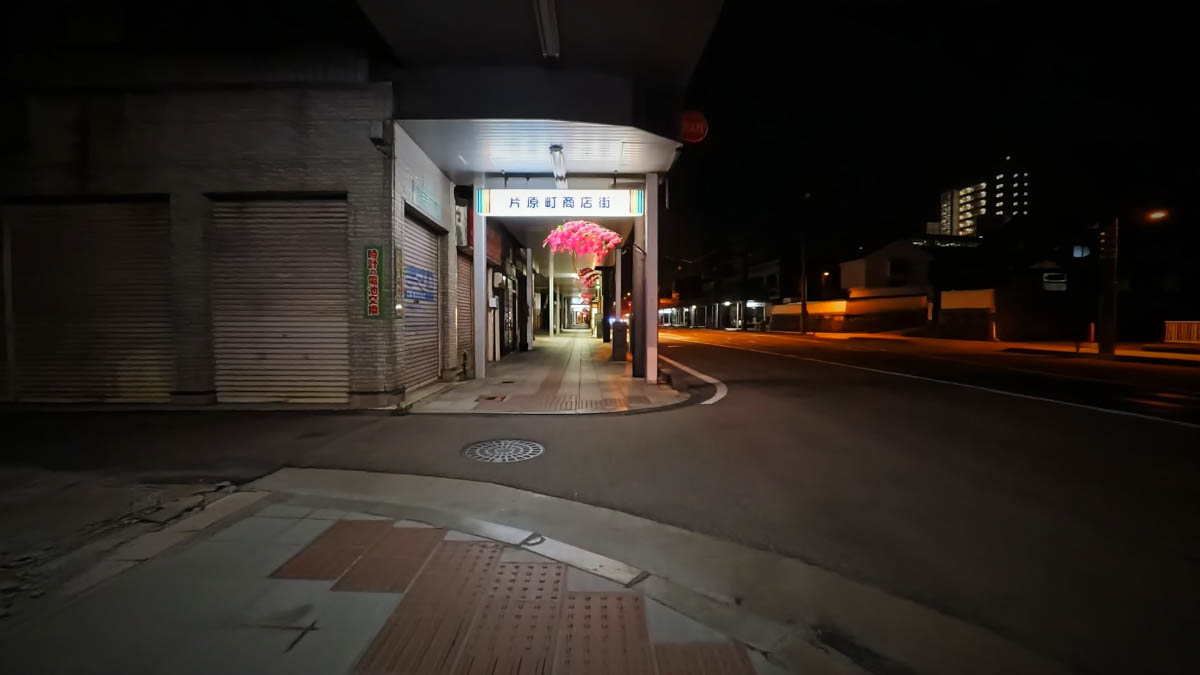
Following the tram tracks, I reached Katahara-machi Shopping Street. At night it is hushed, and the pink decorations of the shopping street stand out all the more.
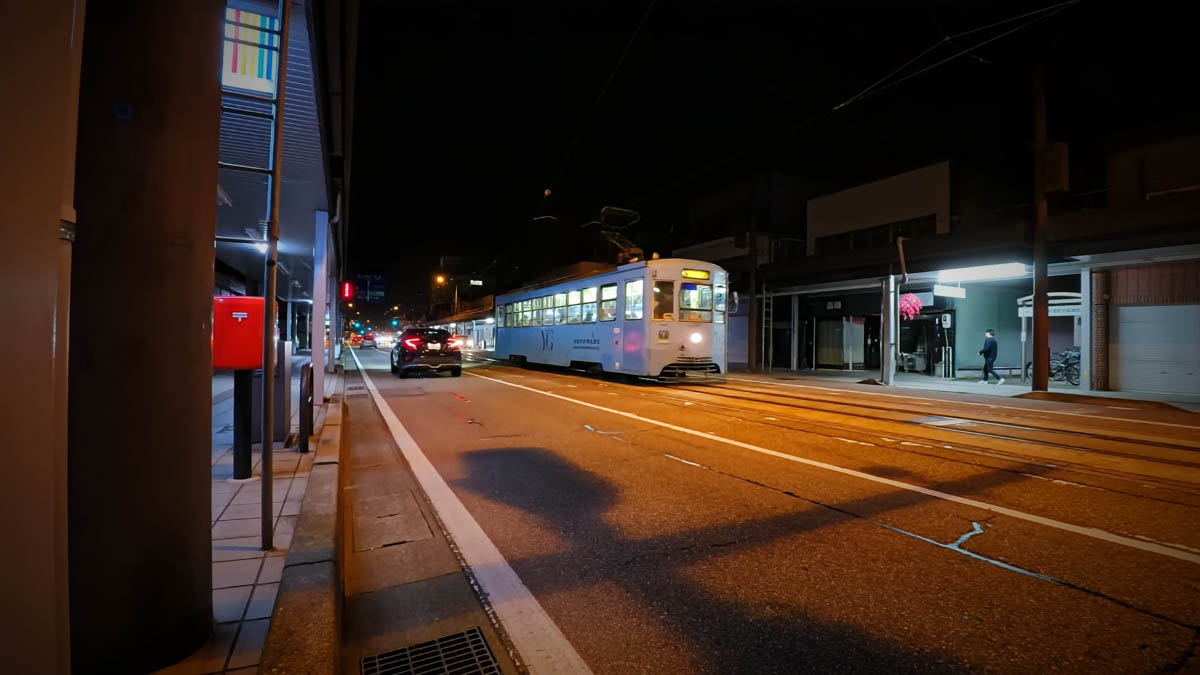
A Manyo Line tram passed by — a light blue car running with its headlights on. A red postbox stands to the left. The Manyo Line connects Takaoka Station with Koshinokata, and after facing possible closure in the 2000s, it continues to operate today. I rode the line the day after filming this.
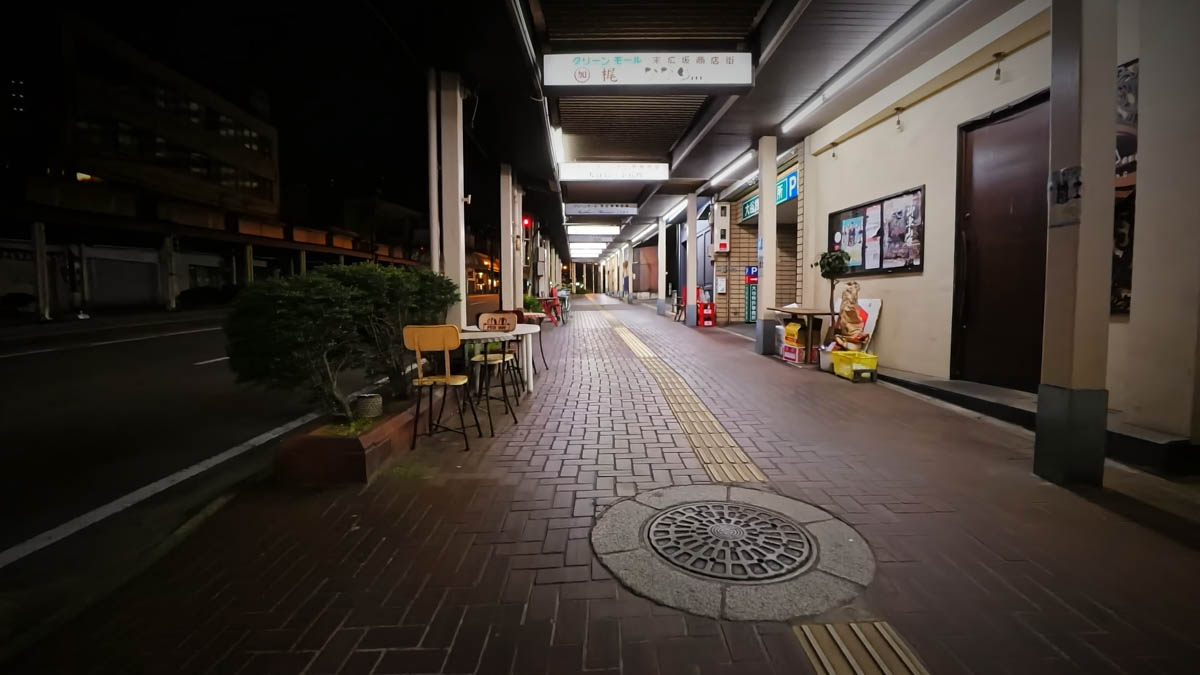
On my way back to the station, I passed through Green Mall Suehiro Shopping Street. The lights inside were on, and one shop had a table and chairs out front. Katahara-machi Shopping Street and Suehiro Shopping Street are both part of the larger shopping area extending from the front of Takaoka Station.
Walking Around Takaoka Station
I hope you'll enjoy this video alongside the post.
Consider subscribing to The Street Archive | MACHIDORI YouTube channel.